


Tajik Farmers Forced to Sow Cotton Despite Economic Unfeasibility
Translated from English, summarized and contextualized by DistantNews.
TLDR
- Tajikistan has begun its 2026 cotton sowing campaign, with farmers mandated to plant 70% of their land with cotton by local authorities.
- Despite government claims of free crop choice, local officials are reportedly forcing farmers to prioritize cotton over more profitable crops like wheat and vegetables.
- This forced cultivation, exemplified by harsh threats from a district chairman, raises legal questions about farmer autonomy and economic viability.
The cotton sowing season has commenced in Tajikistan, but for many farmers, it is not a season of choice but of coercion. Authorities are mandating that 70% of arable land be dedicated to cotton, a crop that has become increasingly economically unviable in recent years. This directive comes despite assurances from the Ministry of Agriculture that farmers are free to choose their crops.
Dear chairman, where were you looking? All these farms in your village sowed alfalfa. Where will you sow cotton tomorrow?
The reality on the ground, however, paints a starkly different picture. Local officials are reportedly applying immense pressure, even resorting to threats, to ensure cotton quotas are met. Reports from the Hamadoni district reveal a district chairman harshly reprimanding farmers for sowing alfalfa instead of cotton, threatening to re-plow fields with tractors if the 70% cotton mandate is not fulfilled. This heavy-handed approach disregards the farmers' own assessments of profitability, pushing them towards crops like wheat and vegetables that offer better returns.
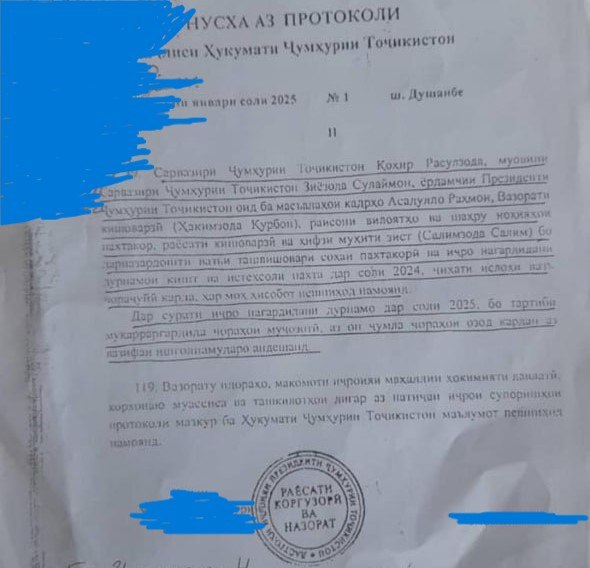
This situation raises significant legal and economic questions. While the Ministry of Agriculture claims farmers have the right to choose their crops, the actions of local authorities suggest a top-down system that prioritizes state-directed agricultural targets over individual economic well-being. The protocol from a government meeting last year, obtained by Asia-Plus, indicates that such instructions to local authorities are not new, despite claims of farmer autonomy.
Tomorrow afternoon we will come with tractors. All farms that sowed like this, we will plow everything. It doesn’t matter who it is, we don’t care what you had there.
From Tajikistan's perspective, cotton has historically been a crucial export commodity. However, the current policy of forced cultivation, especially when it ignores market realities and farmer preferences, seems outdated and potentially damaging to both the agricultural sector and the livelihoods of those who depend on it. The insistence on meeting cotton targets, even at the expense of farmer choice and profitability, reflects a rigid adherence to past economic strategies that may no longer serve the nation's best interests in a changing global market. The pressure on farmers is immense, creating a disconnect between official pronouncements and ground-level realities.
Despite the Ministry of Agriculture’s statement that farmers can freely choose crops for sowing, in practice, local authorities continue to force them to sow cotton – local officials insist that 70% of the fields be sown with cotton, despite the sowing of other crops already conducted.
DistantNews Editorial
Originally published by Asia-Plus in English. Translated, summarized, and contextualized by our editorial team with added local perspective. Read our editorial standards.
More Stories


From Our Blog

What Gets Lost (and Found) When News Is Translated

The Critical Role of Diaspora Media in Global News

What Travellers Should Know About Countries with Restricted Press

A Digital Nomad's Guide to Following Local News

How the Same Story Looks Different in Different Countries
