


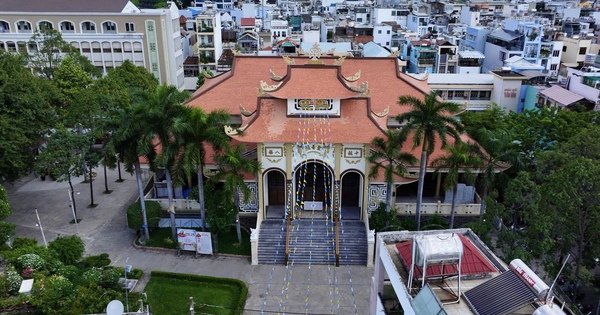
Tan Hoa Church: A unique Vietnamese architectural gem in downtown Ho Chi Minh City
Translated from Vietnamese, summarized and contextualized by DistantNews.
At a glance
In-depth
Sources not specified
Context piece
- Tan Hoa Church in Ho Chi Minh City stands out with its unique Vietnamese architectural style, often mistaken for an ancient pagoda.
- The church, established over half a century ago, was rebuilt in 1995 with a design inspired by traditional Vietnamese dinh (communal houses).
- Its distinctive features, including a multi-tiered roof and a symmetrical layout, create a serene atmosphere that attracts visitors and locals alike.
Nestled within a bustling alley in Ho Chi Minh City, Tan Hoa Church presents a striking facade that blends seamlessly with traditional Vietnamese aesthetics, leading many to mistake it for an ancient pagoda. This unique East Asian architectural style sets it apart amidst the city's dense urban landscape, drawing the attention of passersby who often pause to admire its distinctiveness.
"Many people passing by see it and come in to look. Some bring cameras to take pictures, others shoot videos. They often say the church looks like the temples and pagodas in Hue, so it's very special. Many also like the cool, peaceful green space here," said Mrs. Hoang Mai, a parishioner of Tan Hoa parish. The church's serene environment and distinctive design have made it a local landmark.
According to the Archdiocese of Ho Chi Minh City, the Tan Hoa parish has a history spanning over fifty years. It began as a simple chapel in 1958 on marshy land, later seeing the construction of its first church in 1966 and the completion of a Marian Grotto in 1993. The current church, built starting in 1995, was intentionally designed to emulate the architecture of a Vietnamese dinh, or communal house. It was named "Thanh Mau Dien," a name that honors the Virgin Mary while also resonating with the familiar "Mau" (Mother) deities found in Vietnamese folk beliefs.
The church's design features a square floor plan with sides measuring 37 meters, facing southeast. It incorporates a harmonious blend of a traditional three-bay gate (tam quan), tiered steps (tam cap), and the main sanctuary, creating a balanced axis of symmetry. The 15 steps are divided in a 3:5 ratio, establishing a rhythmic flow and a sense of calm. The use of the number three in its architecture reflects the traditional Vietnamese desire for harmony and good fortune. This thoughtful integration of cultural and religious elements has transformed Tan Hoa Church into a cherished symbol of Vietnamese identity within the heart of the city.
Many people passing by see it and come in to look. Some bring cameras to take pictures, others shoot videos. They often say the church looks like the temples and pagodas in Hue, so it's very special. Many also like the cool, peaceful green space here.
DistantNews Editorial
Originally published by Thanh Niên in Vietnamese. Translated, summarized, and contextualized by our editorial team with added local perspective. Read our editorial standards.
More Stories



From Our Blog

What Gets Lost (and Found) When News Is Translated

The Critical Role of Diaspora Media in Global News

What Travellers Should Know About Countries with Restricted Press

A Digital Nomad's Guide to Following Local News

How the Same Story Looks Different in Different Countries
