

Ho Chi Minh City Establishes 29 Wards: Long Dien Transforms from Southern Gateway to Connecting Hub
Translated from Vietnamese, summarized and contextualized by DistantNews.
At a glance
News
Named sources
New plan
- Long Dien commune in Ho Chi Minh City has been upgraded to a ward (phường), a move supported by residents.
- The upgrade reflects Long Dien's development into a dynamic urban area with a population exceeding 50,000 and a predominantly non-agricultural workforce.
- This administrative change aims to enhance management efficiency and leverage the area's strategic location as a satellite city connecting various economic zones.
Long Dien commune has officially been upgraded to a ward (phường), a significant administrative change that residents overwhelmingly support. This transition is seen as a necessary step aligning with the practical demands and long-term development goals for the southeastern part of Ho Chi Minh City.
The establishment of Long Dien ward has been agreed upon and consented to by the people with a high proportion. This is an objective requirement arising from the local development reality. Long Dien is no longer a purely agricultural commune but is strongly shifting towards urbanization.
The elevation from a commune to a ward signifies more than just a name change; it unlocks substantial opportunities for Long Dien to capitalize on its potential and advantages, positioning it as a new growth pole in the region. Currently, Long Dien boasts a population of over 50,000 across more than 51 square kilometers, with over 52% urban population density and nearly 90% of its workforce engaged in non-agricultural sectors. The economy is dominated by industry, construction, trade, and services, accounting for over 83% of the total economic structure, clearly indicating its urban characteristics.
Vo Minh Tuan, Chairman of the Long Dien Commune People's Committee, stated that the establishment of Long Dien ward received high consensus from the local population. He emphasized that this change is an objective requirement stemming from the local development reality, as Long Dien is no longer a purely agricultural commune but is rapidly transitioning towards urbanization. The shift to an urban administrative model is expected to improve the effectiveness and efficiency of state management, better meeting the needs of citizens and businesses.
The change in management model to urban governance will create conditions to enhance the effectiveness and efficiency of state management, while also better meeting the needs of the people and businesses.
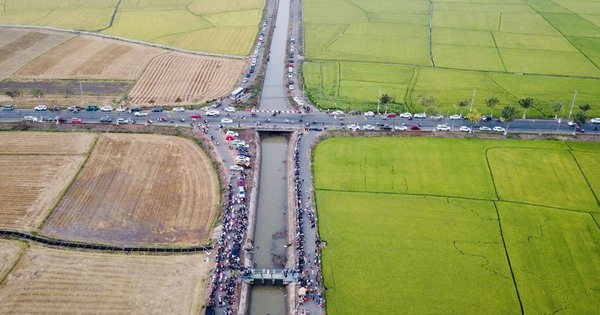
Strategically, Long Dien's location is a key asset. Situated on vital transportation routes like National Highway 55 and provincial roads 44A, 44B, and others, with future connections to the Bien Hoa-Vung Tau expressway, it facilitates robust trade, service, logistics, and tourism development. Urban planning experts view Long Dien as a crucial 'connecting gateway' between dynamic areas like Ba Ria, Long Hai, and Vung Tau. Within the expanded Ho Chi Minh City's urban development strategy, Long Dien is designated as a satellite city vital for population redistribution and easing pressure on the central districts.
This is also a common aspiration of the Party committee, government, and people of the locality to create new momentum for socio-economic development, improve quality of life, and build a civilized and modern urban appearance.
DistantNews Editorial
Originally published by Thanh Niên in Vietnamese. Translated, summarized, and contextualized by our editorial team with added local perspective. Read our editorial standards.
More Stories
From Our Blog

What Gets Lost (and Found) When News Is Translated

The Critical Role of Diaspora Media in Global News

What Travellers Should Know About Countries with Restricted Press

A Digital Nomad's Guide to Following Local News

How the Same Story Looks Different in Different Countries
