


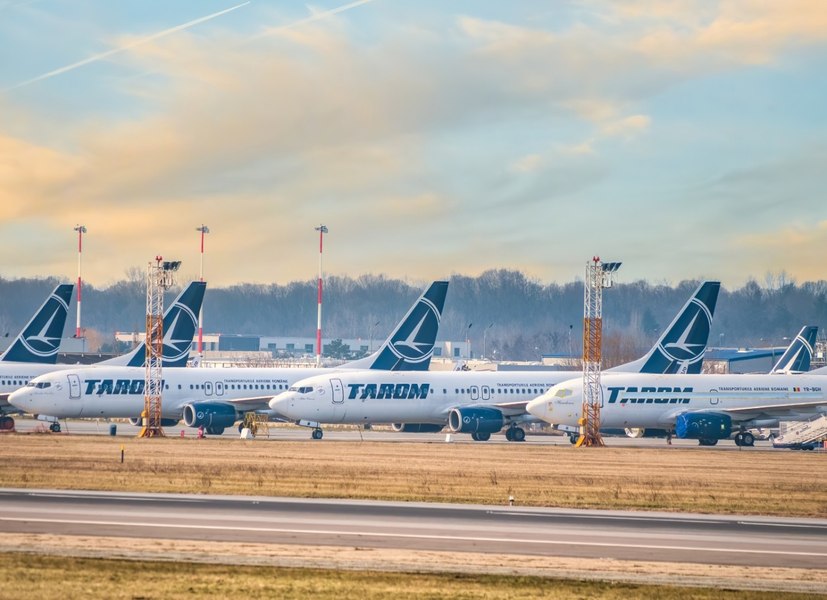
Tarom Misses Recovery Targets, Seeks EU Plan Extension Amid Financial Woes
Translated from Romanian, summarized and contextualized by DistantNews.
TLDR
- Romanian national airline Tarom has failed to meet the targets of its recovery plan approved by the European Commission.
- The airline incurred a loss of 186 million lei last year and has consistently reported operational losses over the past decade, with profit only recorded once from asset sales.
- The government is seeking an extension of the recovery plan and exploring partnerships to ensure Tarom's sustainability, as continued state aid is contingent on the plan's acceptance.
Romania's flag carrier, Tarom, finds itself at a critical juncture as it struggles to adhere to the recovery plan negotiated with the European Commission. Vice Prime Minister Oana Gheorghiu has candidly admitted that the airline has fallen short of its financial targets, accumulating a significant loss of 186 million lei last year alone. This latest setback underscores a decade-long pattern of operational deficits, painting a stark picture of the company's financial health. The stark reality is that Tarom, with its current business model and staffing structure, is not self-sustaining, a fact underscored by the consistent need for state financial injections.
Unfortunately, the company Tarom has not managed to stick to this plan. It is not on schedule.
Despite these challenges, the Romanian government remains committed to finding a viable path forward for Tarom, emphasizing that closure is not the desired outcome. The Ministry of Transport and the airline's interim management are actively engaged in discussions with the European Commission, proposing an extension of the current recovery plan. Vice Premier Gheorghiu expressed hope that the prevailing geopolitical context and the ongoing fuel crisis might persuade the Commission to grant this extension. However, she cautioned that without the EC's approval, further state aid would be impossible, leaving the airline in a precarious position.
Last year, the company Tarom reached a loss of 186 million lei.
Looking beyond continued state support, Romania is actively exploring strategic partnerships as a potential lifeline for Tarom. The government believes that attracting key industry players could inject much-needed expertise, a sustainable business model, and operational efficiencies. While discussions are in their early stages, the focus is on finding a collaborative solution that ensures Tarom's long-term viability without relying solely on taxpayer money. This approach reflects a broader understanding that state-owned enterprises require modernization and strategic alliances to thrive in a competitive global market, moving beyond political slogans to pragmatic solutions.
The company Tarom cannot sustain itself at this moment with the business model it has, with the staff structure it has.
DistantNews Editorial
Originally published by Adevărul in Romanian. Translated, summarized, and contextualized by our editorial team with added local perspective. Read our editorial standards.
More Stories


From Our Blog

What Gets Lost (and Found) When News Is Translated

The Critical Role of Diaspora Media in Global News

What Travellers Should Know About Countries with Restricted Press

A Digital Nomad's Guide to Following Local News

How the Same Story Looks Different in Different Countries
