


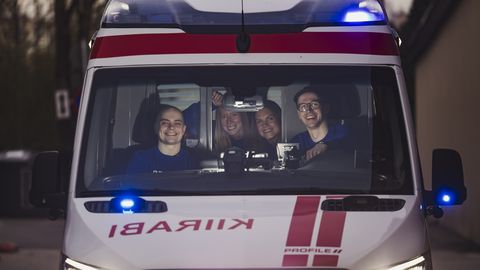
Tartu Ambulance's 'Delta Calls': High-Priority Response Demands Minute-Readiness
Translated from Estonian, summarized and contextualized by DistantNews.
At a glance
News
Sources not specified
Context piece
- Emergency medical services in Tartu, Estonia, respond to "Delta calls," the highest priority dispatches.
- These calls require ambulance crews to be ready within one minute to assist patients in life-threatening situations.
- Dr. Karl Oliver Tomson of Tartu Ambulance describes the work as being prepared to be present during a patient's most critical moments.
When an ambulance receives a "Delta call" in Tartu, Estonia, the crew must be ready to depart within one minute. This designation signifies the highest priority dispatch, indicating a patient whose life or health is in immediate danger.
These critical situations can involve severe trauma, stroke, heart attack, or even clinical death. In such scenarios, every second counts. The urgency is paramount, and the response time is a crucial factor in patient outcomes.
When an ambulance receives a Delta call, the brigade must be in the car within a minute. This is the highest priority call, where medical personnel are waiting for someone in need whose life or health is in direct danger. Be it severe trauma, stroke, heart attack, or clinical death. Every second counts.
Dr. Karl Oliver Tomson, a physician with the Tartu Ambulance service, characterizes the nature of their work. He explains that responding to Delta calls means being prepared to arrive at the scene during a person's most difficult or worst day.
This readiness involves constant vigilance and preparedness. The medical teams must be equipped and mentally prepared to handle a wide range of severe medical emergencies at a moment's notice. Their commitment ensures that aid is delivered as swiftly as possible when lives hang in the balance.
Their work means being prepared to be present on someone's most difficult or worst day.
DistantNews Editorial
Originally published by Postimees in Estonian. Translated, summarized, and contextualized by our editorial team with added local perspective. Read our editorial standards.
More Stories

/nginx/o/2026/06/25/17742351t1hf4a6.jpg)
From Our Blog

What Gets Lost (and Found) When News Is Translated

The Critical Role of Diaspora Media in Global News

What Travellers Should Know About Countries with Restricted Press

A Digital Nomad's Guide to Following Local News

How the Same Story Looks Different in Different Countries
