

Tax Burden Hurts Business Competitiveness, Santo Domingo Chamber Says
Translated from Spanish and summarized by DistantNews. Read the original for the full story.
At a glance
News
Named sources
Context piece
- The Santo Domingo Chamber of Commerce identifies the tax burden as a major factor affecting business competitiveness in the Dominican Republic.
- Business leaders also cite simultaneous changes to labor, social security, criminal and solid-waste laws as operational challenges.
- They expect faster instant payments, planned by the central bank for the first half of 2027, to encourage financial inclusion despite a higher electronic-transfer tax.
For many small businesses, taxes are not the only pressure. Changing regulations are adding new requirements at the same time that companies must keep pace with technology and secure affordable financing.
Fantino Polanco, executive vice president of the Santo Domingo Chamber of Commerce and Production, said, "The issue of the tax burden always comes up as one of the main factors affecting competitiveness." He said recent reforms, including changes to the Criminal Code and Solid Waste Law, and proposals involving the Labor Code and Social Security Law, were adding to the challenge.
The chamber said the reforms aim to update existing rules, improve compliance and protect their sustainability. For business owners, however, the measures mean new requirements and standards arriving simultaneously.
The issue of the tax burden always comes up as one of the main factors affecting competitiveness.
The increase in the electronic-transfer tax, from 0.15% to 0.20%, drew particular reactions from entrepreneurs, service providers and citizens. Businesses that rely on electronic transfers to collect payments face additional operating costs, especially where customers and merchants still depend heavily on cash.
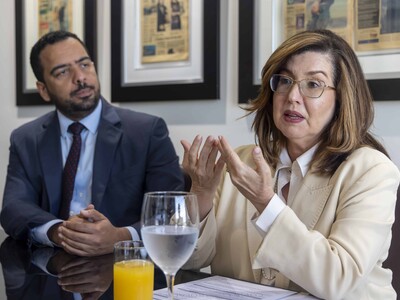
Lucile Houellemont, president of the chamber, said the increase was unlikely to reverse the shift toward digital transactions. She argued that large payments would be difficult to move outside the formal system. Houellemont and Polanco also said the Central Bank’s planned instant-payment system could accelerate financial inclusion when it takes effect in the first half of 2027.
The transfer tax is an easy way to pay taxes; I understand that it would be very difficult to make a large transaction outside the system, but in an increasingly digital world, I do not think transactions will disappear because of a tax, given how easy it is to do business through these transactions.
About this summary
Originally published by Diario Libre in Spanish. Translated, summarized, and contextualized automatically by DistantNews, with a note on how the source frames the story. Not individually reviewed before publishing. How this works.
More Stories



From Our Blog

What Gets Lost (and Found) When News Is Translated

The Critical Role of Diaspora Media in Global News

What Travellers Should Know About Countries with Restricted Press

A Digital Nomad's Guide to Following Local News

How the Same Story Looks Different in Different Countries
