


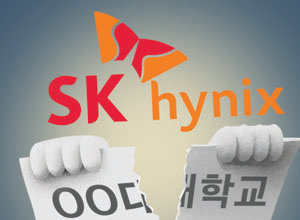
Tech Giants Seek "Humanity" and "Insight" Over Degrees in AI Era Talent Hunt
Translated from Korean, summarized and contextualized by DistantNews.
At a glance
News
Sources not specified
Context piece
- Global tech giants are prioritizing "humanity" and "insight" over traditional qualifications in their search for AI-era talent.
- Leaders like Elon Musk seek individuals who can clearly define problems, while Satya Nadella values "human depth and digital flexibility."
- SK Group Chairman Chey Tae-won also emphasizes the need for distinct human qualities in the age of AI.
The global race for talent in the artificial intelligence era is reshaping how major tech companies define ideal candidates. Companies are increasingly looking beyond traditional academic credentials, focusing instead on uniquely human qualities like insight, problem-solving ability, and emotional intelligence.
People who can clearly define problems.
Billionaire entrepreneur Elon Musk, now the world's first trillionaire, seeks individuals capable of clearly defining problems. Microsoft CEO Satya Nadella highlights the importance of "human depth and digital flexibility." Jensen Huang, CEO of Nvidia, famously advised his children against learning to code, stating that "the most powerful programming language of the future is the human language." These sentiments suggest a growing consensus among tech leaders that core human capabilities are paramount in an AI-driven world.
Human depth and digital flexibility.
Experts interpret these leaders' criteria as pointing toward qualities like "humanity" and "insight." In South Korea, SK Group Chairman Chey Tae-won echoes this sentiment, emphasizing the need for distinct human attributes suited for the AI age. This shift signals a move away from purely technical skills towards a greater appreciation for creativity, critical thinking, and interpersonal understanding as essential for future success in the tech industry.
The most powerful programming language of the future is the human language.
DistantNews Editorial
Originally published by Dong-A Ilbo in Korean. Translated, summarized, and contextualized by our editorial team with added local perspective. Read our editorial standards.
More Stories



From Our Blog

What Gets Lost (and Found) When News Is Translated

The Critical Role of Diaspora Media in Global News

What Travellers Should Know About Countries with Restricted Press

A Digital Nomad's Guide to Following Local News

How the Same Story Looks Different in Different Countries
