

/nginx/o/2026/05/12/17631712t1hc678.jpg)
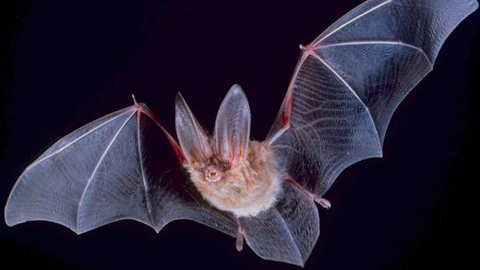
Ten weeks of practice can make your brain function like a bat's, enabling you to 'see' with sound
Translated from Estonian, summarized and contextualized by DistantNews.
At a glance
In-depth
Sources not specified
Context piece
- Humans can learn to perceive their surroundings using only mouth clicks and the echoes they produce, a skill known as echolocation.
- Studies suggest this adaptation can occur within just ten weeks of practice, significantly altering brain function, including areas typically associated with sight.
- Research on dolphin brains indicates echolocation relies on a complex interplay of hearing, movement, and prediction, raising questions about latent human cognitive abilities.
Humans can develop the ability to 'see' their environment using only clicks made with their mouths and the echoes that bounce back, a remarkable feat of sensory adaptation. This skill, known as echolocation, allows individuals to navigate and understand their surroundings through sound.
Surprisingly, research indicates that mastering this ability does not require years of training. Studies suggest that as little as ten weeks of dedicated practice may be sufficient for individuals to learn to echolocate effectively. The process is not merely about learning a new skill; it profoundly impacts the brain. During this learning period, brain regions traditionally considered the primary centers for vision begin to change and adapt, taking on new functions.
Further insights into echolocation come from studies of dolphin brains. These studies suggest that echolocation is not a simple auditory process but relies on a sophisticated coordination between hearing, motor control, and predictive processing. This complex interplay raises intriguing questions about whether humans possess a latent capacity for such abilities, perhaps hidden or dormant within our cognitive architecture, waiting to be awakened through focused training.
DistantNews Editorial
Originally published by Postimees in Estonian. Translated, summarized, and contextualized by our editorial team with added local perspective. Read our editorial standards.
More Stories
/nginx/o/2026/07/25/17806808t1h66d3.jpg)
/nginx/o/2026/07/23/17801111t1h9930.jpg)

From Our Blog

What Gets Lost (and Found) When News Is Translated

The Critical Role of Diaspora Media in Global News

What Travellers Should Know About Countries with Restricted Press

A Digital Nomad's Guide to Following Local News

How the Same Story Looks Different in Different Countries
