

Teotihuacan Shooting: Gunman Kills Two Tourists, Investigation Eyes 'Copycat' Motive Linked to Columbine
Translated from Spanish, summarized and contextualized by DistantNews.
TLDR
- A 27-year-old man opened fire on tourists at the Teotihuacan archaeological site, killing two and injuring 13.
- The assailant, identified as Julio César "N", was wounded by security and subsequently died by suicide.
- Investigators found an AI-generated image of the attacker with Eric Harris and Dylan Klebold, perpetrators of the Columbine High School massacre, suggesting a possible "copycat" motive.
Mexico City – A shocking incident at the Teotihuacan archaeological site has left the nation reeling after a gunman opened fire on tourists, resulting in fatalities and injuries. The attack, which occurred on the Pyramid of the Moon, has raised serious questions about security at cultural heritage sites and the potential influence of violent ideologies.
the aggressor of 27 years opened fire on a group of tourists above the Pyramid of the Moon, leaving a balance of two dead and 13 injured.
The assailant, Julio César "N", reportedly acted alone in planning the attack. His subsequent death by suicide after being apprehended by security forces adds a tragic layer to the event. Investigators are exploring various motives, including the possibility of a "copycat" phenomenon, where individuals imitate high-profile violent acts.
Among the belongings of Julio César "N" was found an image created with AI next to Eric Harris and Dylan Klebold, authors of the Columbine Massacre.
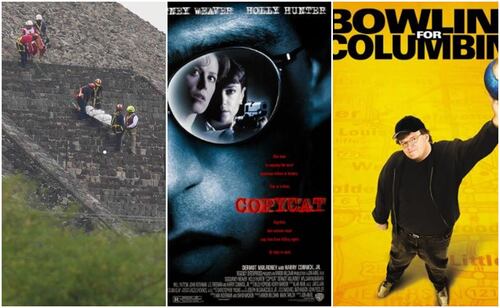
Adding a disturbing dimension to the investigation, authorities discovered an AI-generated image depicting the attacker alongside Eric Harris and Dylan Klebold, the perpetrators of the infamous Columbine High School massacre in the United States. This finding has drawn parallels to films like "Copycat" and Michael Moore's documentary "Bowling for Columbine," which explore the psychology and societal factors behind such violent acts. The discovery underscores the growing concern over the potential for online content and media portrayals of violence to influence vulnerable individuals, prompting a deeper examination of the societal factors contributing to such tragedies in Mexico and beyond.
This indicates the tendency to imitate a crime.
DistantNews Editorial
Originally published by El Universal in Spanish. Translated, summarized, and contextualized by our editorial team with added local perspective. Read our editorial standards.
More Stories


From Our Blog

What Press Freedom Means for the News You Read

What Gets Lost (and Found) When News Is Translated

The Critical Role of Diaspora Media in Global News

What Travellers Should Know About Countries with Restricted Press

A Digital Nomad's Guide to Following Local News
