

Terengganu to Enforce Long-Delayed Act to Combat Pulau Redang Pollution
Translated from Malay, summarized and contextualized by DistantNews.
At a glance
News
Sources not specified
New plan
- Terengganu will implement the Solid Waste and Public Cleansing Management Act 2007 (Act 672) to address waste management and marine pollution in Pulau Redang.
- The delayed implementation of Act 672, nearly 20 years old, aims to streamline waste collection and disposal, reduce marine pollution, and support green economic development.
- The state government is in the final stages of adopting the act to enhance waste management systems, contributing to long-term environmental conservation efforts.
Pulau Redang, a valuable asset to Terengganu, faces escalating marine pollution, including plastics and ghost nets, prompting the state to finally implement the Solid Waste and Public Cleansing Management Act 2007 (Act 672).
The beauty of Pulau Redang is an invaluable asset to Terengganu. However, the increasingly worrying issue of marine waste pollution, including plastics and ghost nets, requires more comprehensive and continuous action.
The delayed implementation of the nearly 20-year-old act is now in its final ratification stages, according to Batu Rakit assemblyman Mohd. Shafizi Ismail. He stated that the act will streamline solid waste collection and disposal, bolster recycling practices, and support the local community's green economic development.
"The beauty of Pulau Redang is an invaluable asset to Terengganu," Shafizi said. "However, the increasingly worrying issue of marine waste pollution, including plastics and ghost nets, requires more comprehensive and continuous action."
The state government is in the final stages of adopting this act to strengthen the solid waste management system more effectively and sustainably, thereby having a long-term impact on environmental conservation efforts.
The state government's move to adopt Act 672 aims to strengthen the solid waste management system, making it more effective and sustainable. This initiative is expected to have a long-term positive impact on environmental conservation efforts. The act, enforced by the Solid Waste Management and Public Cleansing Corporation (SWCorp), will regulate controlled solid waste management and establish uniform public cleansing services.
For Pulau Redang specifically, waste from resorts, business premises, and residential areas will be managed and segregated more orderly.
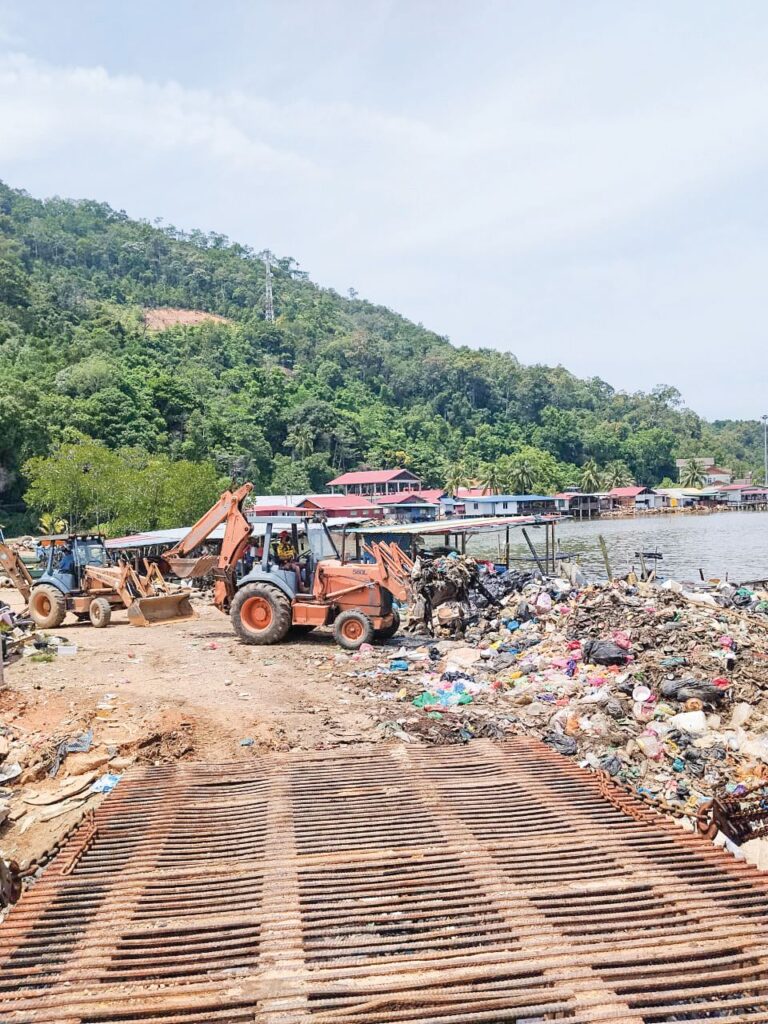
Previously, a report by Mingguan Malaysia highlighted severe waste issues in Kampung Baru Pulau Redang, with various types of trash, including from abroad, accumulating in the sea and on its shores. In response, the Kuala Terengganu City Council began clearing the waste using two boats capable of lifting approximately 12 metric tons daily. Shafizi believes the act's implementation will mark a significant shift towards systematic waste management, starting from its source. He anticipates that waste from resorts, businesses, and residential areas will be managed and segregated more effectively, reducing pollution and its impact on the marine ecosystem while creating green economic opportunities through recycling.
As a result, we can not only reduce pollution and waste overflow into the marine ecosystem but also create green economic opportunities for the local community through recycling practices.
DistantNews Editorial
Originally published by Utusan Malaysia in Malay. Translated, summarized, and contextualized by our editorial team with added local perspective. Read our editorial standards.
More Stories

From Our Blog

What Gets Lost (and Found) When News Is Translated

The Critical Role of Diaspora Media in Global News

What Travellers Should Know About Countries with Restricted Press

A Digital Nomad's Guide to Following Local News

How the Same Story Looks Different in Different Countries
