


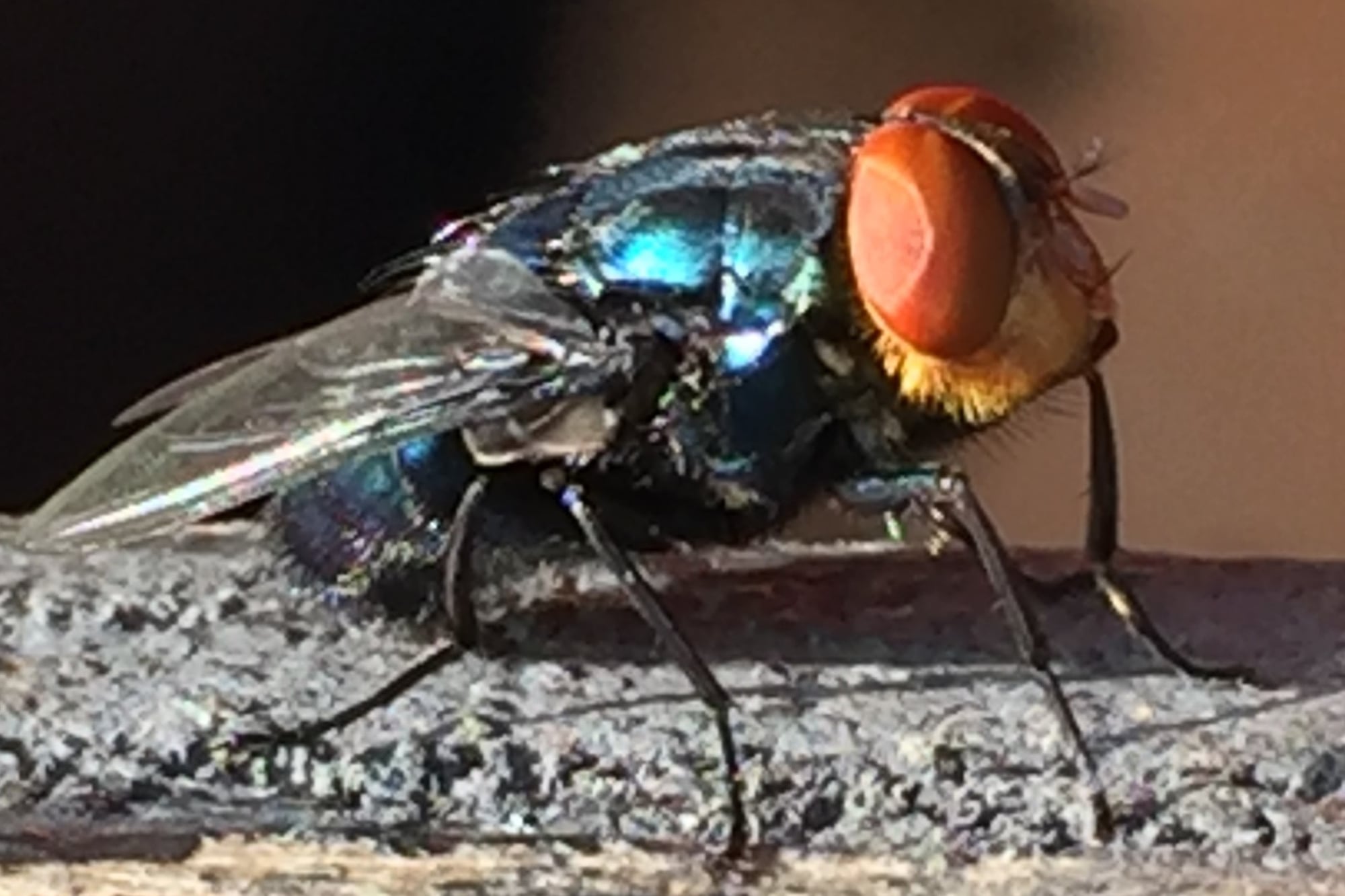
Terrifying Parasite Devouring Livestock Tissue Reappears in U.S., Sparking Industry Alarm
Translated from Spanish, summarized and contextualized by DistantNews.
At a glance
News
Named sources
Ongoing story
- A parasitic New World screwworm fly, eradicated from the U.S. six decades ago, has reappeared in Texas, alarming the livestock industry.
- The fly lays eggs in open wounds of warm-blooded animals, and its larvae consume live tissue, potentially causing death if untreated.
- While the risk to humans and pets is low and food safety is not threatened, a widespread outbreak could severely impact the U.S. cattle industry, which is already at a 75-year low.
The United States is on high alert following the detection of the New World screwworm fly in Texas, a parasite that consumes live animal tissue and was thought to be eradicated from the country 60 years ago. The U.S. Department of Agriculture's Animal and Plant Health Inspection Service confirmed a case in a three-week-old calf in La Pryor, Texas, near the Mexican border.
This marks the first confirmed detection of the pest in Texas since 1966. While it is currently the only identified case in the U.S., the finding follows months of warnings about the parasite's steady advance from Central America and Mexico into American territory. The screwworm fly is the larva of a parasitic fly that deposits its eggs in the open wounds or body cavities of warm-blooded animals. Once hatched, the larvae burrow into living flesh, feeding on tissue and causing severe injuries, infections, and potentially death if not treated promptly.
the first confirmed detection of this pest in Texas since 1966.
Health authorities have stressed that the risk to the general population and pets is considered low, and the parasite poses no threat to food safety. However, the potential economic impact on the U.S. livestock industry could be substantial. With the U.S. cattle herd at its lowest level in 75 years, an expansion of the screwworm infestation could further reduce livestock availability and drive up already historically high beef prices.
In response to the detection, the USDA has initiated a containment plan that includes releasing sterile male flies. This technique, successfully used to eradicate the pest in the past, involves releasing large numbers of sterile males that cannot reproduce, thereby disrupting the screwworm's life cycle.
the U.S. food supply remains safe. The current risk to animals and people in the United States is very low.
DistantNews Editorial
Originally published by La Nación in Spanish. Translated, summarized, and contextualized by our editorial team with added local perspective. Read our editorial standards.
More Stories



From Our Blog

What Gets Lost (and Found) When News Is Translated

The Critical Role of Diaspora Media in Global News

What Travellers Should Know About Countries with Restricted Press

A Digital Nomad's Guide to Following Local News

How the Same Story Looks Different in Different Countries
