


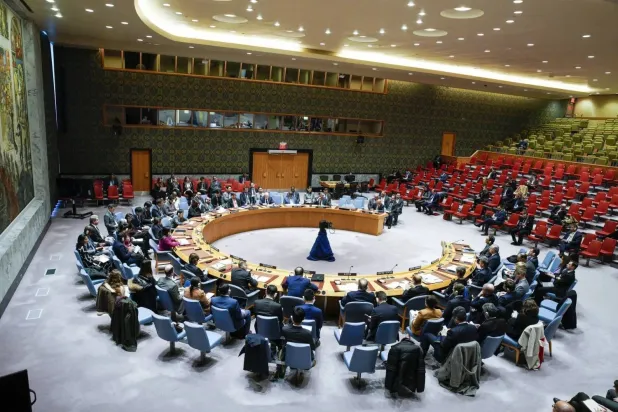
Tetteh Says Moving Libya's Political Process Forward Remains Crucial
Summarized and contextualized by DistantNews.
At a glance
News
Named sources
Ongoing story
- Libya possesses Africa's largest oil reserves but faces severe infrastructure failures, including prolonged electricity and water outages.
- The UN Special Representative highlighted the critical need to advance Libya's political process, emphasizing electoral reforms and institutional reunification.
- Recent clashes, drone attacks on oil facilities, and the governor of the Central Bank's resignation underscore the nation's instability and mounting pressures.
Libya's political process remains critically stalled, despite the nation holding Africa's largest oil reserves. Hundreds of thousands of people have endured prolonged periods without electricity or water, exposing the deep consequences of institutional fragmentation. Hanna Tetteh, the UN Special Representative, told the Security Council that widespread outages and public discontent, worsened by a severe heatwave, highlight these failures. Approximately $1 billion is spent monthly on fuel imports, yet electricity systems remain vulnerable, suggesting large-scale diversion of subsidized fuel.
The need to move Libya's political process forward remains crucial.
The UN roadmap focuses on three pillars: credible elections through reforms, inclusive dialogue, and the reunification of executive institutions. The Four Plus Four Committee has met seven times since April 29, addressing contentious issues and preparing for another meeting on August 20. Its recommendations cover governance, the economy, security, reconciliation, and human rights.
The recent widespread electricity outages and public discontent, exacerbated by a prolonged heat wave, have exposed the consequences of institutional fragmentation.
Mounting pressure is evident in fiscal affairs, with the governor of the Central Bank requesting to be relieved of his position on August 9. This follows salary increases for military and security personnel in eastern Libya, initiated in June. Security remains a major concern, marked by heavy clashes among armed groups involved in trafficking and smuggling in Zawiya and Sorman. Drone attacks targeting oil facilities in Zawiya have caused structural damage and disruption, prompting the National Oil Corporation to declare a state of emergency and call for investigations.
Approximately $1 billion is spent monthly on fuel imports. Yet electricity systems remain vulnerable to fuel shortages.
Further compounding the instability, Major General Fawzi Mansouri, director of the Military Intelligence Department for the LNA, was assassinated in Benghazi on August 10 in a reported car bombing. These events collectively illustrate the complex challenges facing Libya as it struggles to move forward politically and economically.
The move is an indication of the mounting pressure on the central bank.
DistantNews Editorial
Originally published by Asharq Al-Awsat. Summarized and contextualized by our editorial team with added local perspective. Read our editorial standards.
More Stories

From Our Blog

What Gets Lost (and Found) When News Is Translated

The Critical Role of Diaspora Media in Global News

What Travellers Should Know About Countries with Restricted Press

A Digital Nomad's Guide to Following Local News

How the Same Story Looks Different in Different Countries
