


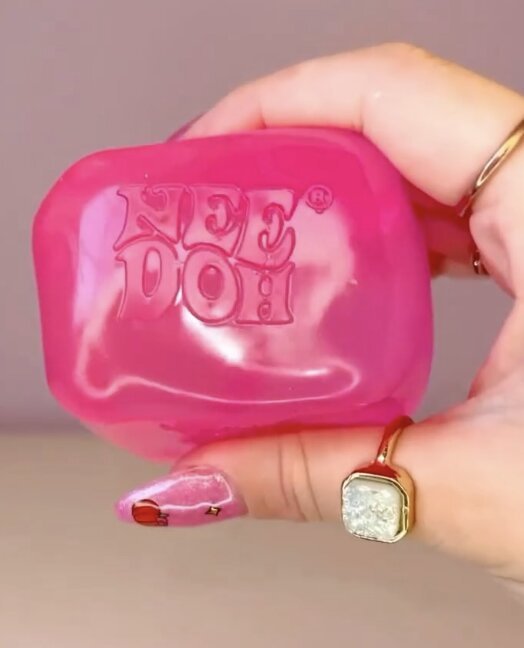
The $8 toy reselling for $700... What is this toy causing a stir in America?
Translated from Korean, summarized and contextualized by DistantNews.
TLDR
- The "NeeDoh" sensory toy has become a viral sensation in the United States, leading to shortages and a booming resale market.
- Originally priced around $5.99, some units are reselling for up to $500 on platforms like eBay.
- The toy's popularity, fueled by social media, has resulted in supply chain issues, increased counterfeiting, and instances of disruptive customer behavior in stores.
A simple squishy toy, "NeeDoh," has taken the United States by storm, transforming from a decade-old product into a must-have item driven by the relentless engine of social media. As reported by the New York Post via Dong-A Ilbo, this tactile toy, known for its satisfyingly squishy texture and vibrant colors, is experiencing a frenzy akin to collectible crazes of the past. The phenomenon is so intense that some pieces are being resold for astronomical markups, with a $5.99 toy fetching as much as $500.
This year, in nine weeks, all of last year's inventory was sold out.
The "NeeDoh hunting" trend, where consumers document their efforts to find the elusive toy, has become a content staple on platforms like TikTok and Instagram. This viral marketing, albeit organic, has created a demand that manufacturer Schylling is struggling to meet. CEO Paul Weingard noted that their entire year's inventory was depleted in just nine weeks, forcing the company to ramp up production significantly. Yet, the supply chain remains strained, unable to keep pace with the insatiable appetite fueled by online trends.
This surge in popularity has unfortunately spawned a darker side: an increase in counterfeit products and outright scams. Schylling has issued warnings about fake items appearing on various online marketplaces, urging consumers to purchase only from authorized retailers. Furthermore, the intense demand has led to chaotic scenes in physical stores, with some retailers even halting sales temporarily due to unruly customer behavior. This situation is particularly concerning as it impacts children, including those with autism spectrum disorder, who rely on the toy for sensory regulation and may now struggle to access it due to scarcity and inflated prices.
We cannot cope with the disorder that arises during the purchase of NeeDoh. We will stop selling until the trend subsides.
From a South Korean perspective, this story offers a fascinating glimpse into the power of globalized trends and the often-unpredictable nature of the toy market. While South Korea has its own popular "squishy" toys, the scale and fervor of the American "NeeDoh" craze, amplified by Western social media platforms, is remarkable. It highlights how a product's value can be dramatically inflated through online hype, creating a secondary market that benefits resellers more than the original creators or consumers. The article's inclusion of the toy's similarity to Korean "mollangi" toys provides a relatable anchor, but the sheer economic disparity in the resale market underscores the unique dynamics at play in the US.
We are unable to find the product our child with autism spectrum uses, and the price increase has made it difficult to purchase.
DistantNews Editorial
Originally published by Dong-A Ilbo in Korean. Translated, summarized, and contextualized by our editorial team with added local perspective. Read our editorial standards.
More Stories


From Our Blog

What Gets Lost (and Found) When News Is Translated

The Critical Role of Diaspora Media in Global News

What Travellers Should Know About Countries with Restricted Press

A Digital Nomad's Guide to Following Local News

How the Same Story Looks Different in Different Countries
