


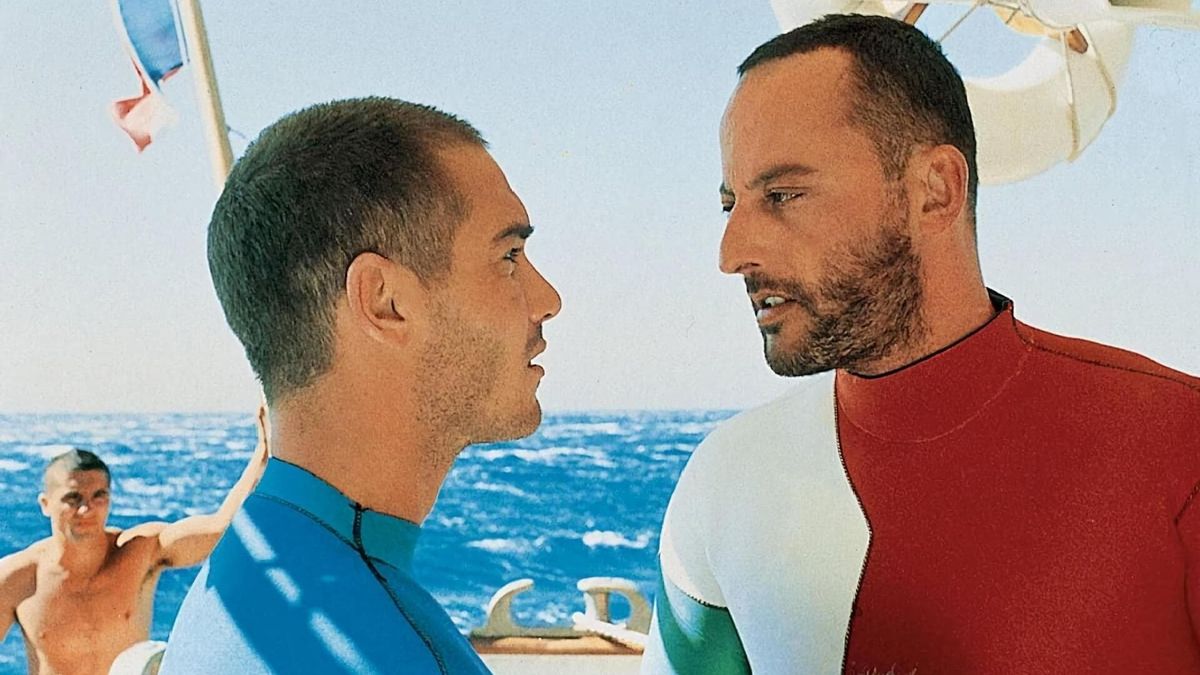
The Big Blue: A look back at Luc Besson's iconic French film
Translated from Hungarian, summarized and contextualized by DistantNews.
At a glance
In-depth
Sources not specified
Context piece
- "The Big Blue" is a 1988 French film about two childhood friends who become world-class free divers.
- The movie explores themes of rivalry, love, and pushing human limits, with Jacques Mayol feeling the sea is his true home.
- It was a major box office success in France and is considered a cult classic, noted for its stunning visuals and music.
Luc Besson's 1988 film "The Big Blue" (Le Grand Bleu) remains a significant work in French cinema, celebrated for its breathtaking underwater cinematography and evocative score. The film chronicles the deep bond between Jacques Mayol and Enzo Molinari, childhood friends who grow into the world's top free divers. Their lives become intertwined with intense rivalry and profound respect as they compete in the depths of the ocean.
While the story centers on their athletic pursuits, "The Big Blue" delves into more profound themes. For Jacques Mayol, played by Jean-Marc Barr, the ocean represents more than a sporting arena; it is his true home, a place of profound connection. The narrative explores the human drive to explore limits, the complexities of love, and the enduring nature of friendship against a backdrop of exhilarating competition.
Enzo Molinari, portrayed by Jean Reno in a career-defining role, embodies a passionate and fiercely competitive spirit. His character, inspired by real-life diver Enzo Maiorca but significantly fictionalized, showcases a compelling blend of toughness, humor, and vulnerability. The film's visual splendor, captured by cinematographer Carlo Varini, and the iconic, mystical soundtrack by Éric Serra, contribute significantly to its unique, almost spiritual atmosphere.
Filmed across stunning global locations including Greece, Italy, Peru, and France, "The Big Blue" was a massive commercial success in France, running in theaters for months. It has since achieved cult status, with many considering it Besson's most personal film. The recurring motif of dolphins symbolizes freedom and Jacques's special connection to the marine world, enhancing the film's poetic and contemplative quality.
DistantNews Editorial
Originally published by Magyar Nemzet in Hungarian. Translated, summarized, and contextualized by our editorial team with added local perspective. Read our editorial standards.
More Stories



From Our Blog

Countries Without a Free Press: What You Need to Know

What Press Freedom Means for the News You Read

What Gets Lost (and Found) When News Is Translated

The Critical Role of Diaspora Media in Global News

What Travellers Should Know About Countries with Restricted Press
