


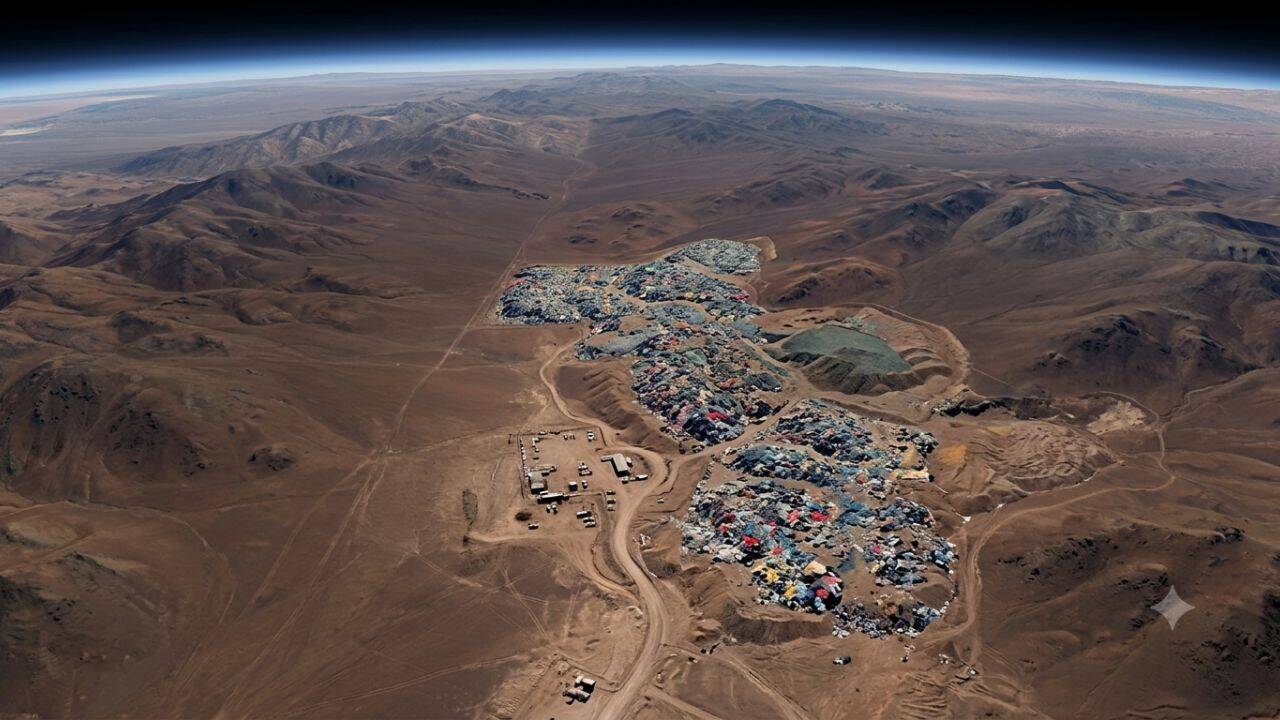
The clothing mountain visible from space: How 60,000 tonnes of discarded clothes ended up in Chile’s Atacama Desert
Summarized and contextualized by DistantNews.
At a glance
In-depth
Sources not specified
Context piece
- A vast mountain of discarded clothing, estimated at 60,000 tons, has accumulated in Chile's Atacama Desert.
- This textile waste originates from the global fast fashion industry and the international second-hand trade.
- While some clothing finds new owners, unsold items are often abandoned, creating a significant environmental problem.
A staggering mountain of discarded clothing, estimated to contain around 60,000 tons, has become a stark symbol of the global fast fashion crisis in Chile's Atacama Desert. This immense pile of unwanted garments, originating from around the world, now covers the desert landscape near the northern city of Alto Hospicio.
Satellite images have revealed the scale of the problem, highlighting the hidden environmental cost of modern fashion consumption.
Chile has become a major hub for used clothing, with over 60,000 tons arriving annually through the port of Iquique, largely from Europe and North America. The city's free-trade zone facilitates easy importation, and traders sort and resell much of the clothing across Latin America, supporting numerous jobs. However, the system falters when garments cannot be sold.
Items of poor quality, outdated fashion, or unsold surplus become costly to dispose of properly. Rather than paying for authorized waste facilities or export, some traders resort to illegally abandoning or burning the clothes in the desert. This practice has led to the continuous growth of the "Atacama clothing mountain," with satellite imagery revealing the vast scale of the problem.
Tens of thousands of tonnes of textiles now remain scattered across several dumping areas surrounding Alto Hospicio.
Environmental groups highlight that the piles continue to expand as new shipments arrive yearly, while little of the existing waste is removed. Among the discarded items are winter coats, sportswear, children's clothing, and even garments still bearing original price tags, many never having been worn by a consumer before entering the second-hand market. The complex international network for textile recycling means that donating clothes does not guarantee reuse.
The piles continue to expand as fresh shipments arrive every year while relatively little existing waste is removed.
DistantNews Editorial
Originally published by Times of India. Summarized and contextualized by our editorial team with added local perspective. Read our editorial standards.
More Stories



From Our Blog

What Press Freedom Means for the News You Read

What Gets Lost (and Found) When News Is Translated

The Critical Role of Diaspora Media in Global News

What Travellers Should Know About Countries with Restricted Press

A Digital Nomad's Guide to Following Local News
