


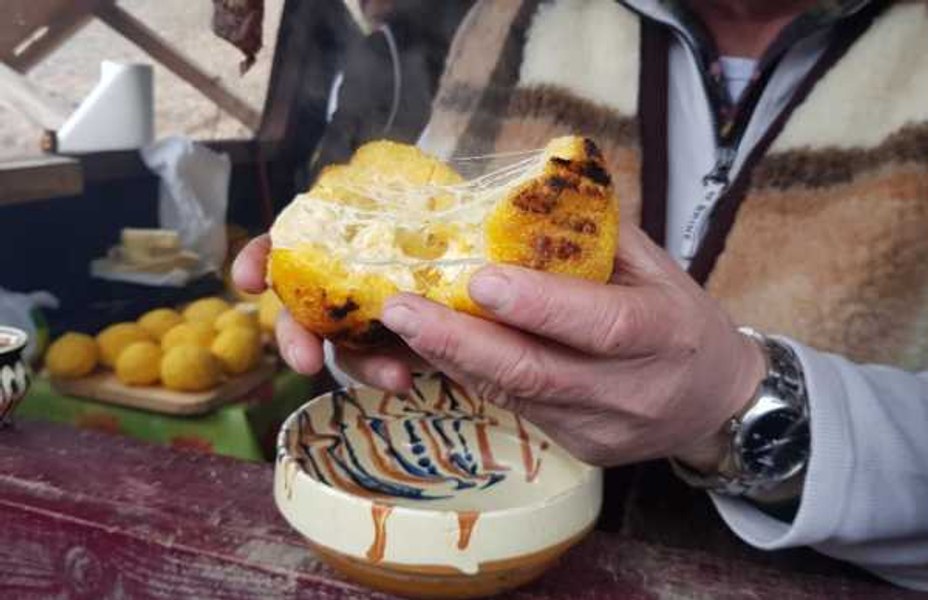
The 'Curse' of Polenta: How Corn Became a Romanian Staple
Translated from Romanian, summarized and contextualized by DistantNews.
At a glance
In-depth
Sources not specified
Context piece
- Corn-based polenta, a staple of Romanian cuisine, is a relatively recent introduction, appearing only around the 18th century.
- The cultivation of corn in the Romanian Principalities was encouraged by rulers like Constantin Brâncoveanu and the Mavrocordats, partly because the Ottoman Empire did not demand it as tribute.
- While polenta is now a symbol of Romanian gastronomy, its late arrival and historical health issues contrast with its perceived traditional status.
Polenta, a dish often considered a cornerstone of Romanian cuisine and a symbol of its culinary identity, has a history far shorter and more complex than commonly believed. While many associate it with ancient traditions, the corn-based version, now ubiquitous in dishes like tochitura, sarmale, and bulz, only emerged in Romanian principalities around the 18th century.
Corn itself arrived in Europe from the Americas, introduced by Spanish and Portuguese explorers. It reached Western and Central Europe in the 16th century but took another hundred years to appear in Moldova and Wallachia. Early cultivation focused on the Danube valley in Wallachia, later spreading to Moldova. Romanian rulers and Phanariote administrators actively promoted corn farming, partly because it was an unfamiliar crop to the Ottoman Empire, thus exempt from tribute demands.
The grain's name in Romanian, "porumb," reportedly stems from the resemblance of its cob to a bird, while in Moldova, it was called "păpușoi," likening the silk to hair. Despite its relatively recent historical presence, polenta has become deeply ingrained in Romanian culinary culture, often mistakenly perceived as an age-old national dish.
DistantNews Editorial
Originally published by Adevărul in Romanian. Translated, summarized, and contextualized by our editorial team with added local perspective. Read our editorial standards.
More Stories



From Our Blog

What Gets Lost (and Found) When News Is Translated

The Critical Role of Diaspora Media in Global News

What Travellers Should Know About Countries with Restricted Press

A Digital Nomad's Guide to Following Local News

How the Same Story Looks Different in Different Countries
