

The footballer who played three World Cups for three different national teams without changing country
Translated from Spanish, summarized and contextualized by DistantNews.
At a glance
In-depth
Sources not specified
Context piece
- Footballer Dejan Stanković holds a unique record, having played in three World Cups for three different national teams without changing his nationality.
- His career spanned significant geopolitical changes in the Balkans, with Yugoslavia evolving into Serbia and Montenegro, and finally Serbia.
- Stanković represented Yugoslavia in 1998, Serbia and Montenegro in 2006, and Serbia in 2010, with the country's borders shifting around him.
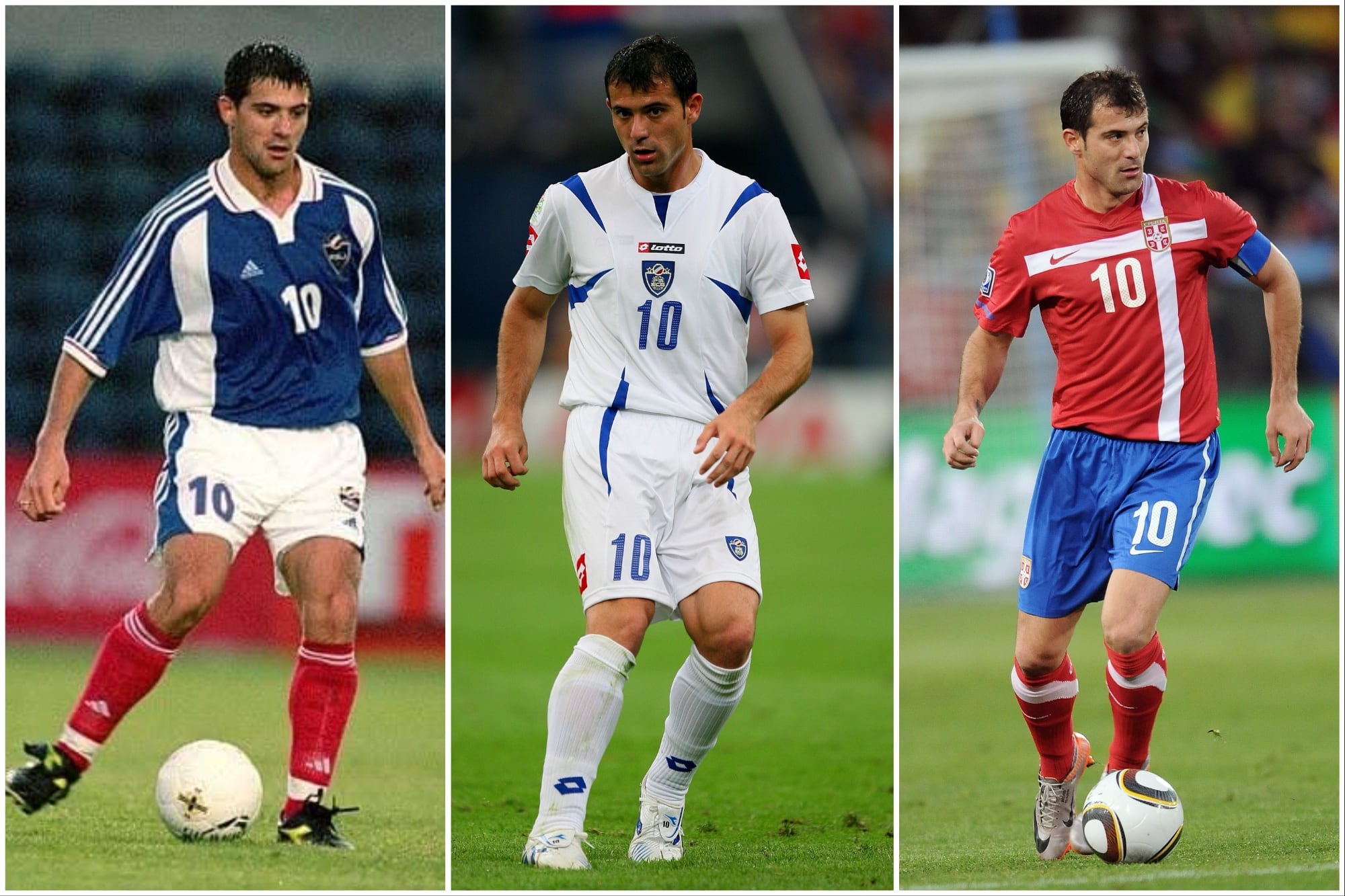
Dejan Stanković's football career is a stark reflection of the turbulent 20th-century history of the Balkans. He is the only player to have competed in three World Cups for three distinct national teams without ever changing his country of citizenship. His journey saw him play for Yugoslavia in France in 1998, for Serbia and Montenegro in Germany in 2006, and for Serbia in South Africa in 2010.
He played three World Cups with three different national teams: Yugoslavia in France 1998, Serbia and Montenegro in Germany 2006, and Serbia in South Africa 2010.
Born in Belgrade in 1978, Stanković's formative years were marked by a region where national borders were fluid. He began his football career when Yugoslavia was still a unified state. By his first World Cup, he represented a diminished version of that nation. By his last, the political map had shifted again, with Montenegro's independence leading to Serbia competing as a standalone team.
He did not do it through naturalization or a change of convenience. He did not choose three countries. It was the country that changed around him.
At 20, Stanković was a rising star for Red Star Belgrade and had already moved to Lazio when he joined the Yugoslavian team for the 1998 World Cup. This team was the Federal Republic of Yugoslavia, comprising Serbia and Montenegro after the original country's dissolution. He played a key role, starting in matches against Germany and the United States, helping Yugoslavia advance to the knockout stage where they were eliminated by the Netherlands.
Born in Belgrade on September 11, 1978, Stanković grew up in a region where borders ceased to be a certainty.
As Stanković's career flourished in Italy, politics reshaped his national team affiliation. The Yugoslavia of 1998 gave way to the brief union of Serbia and Montenegro. Under this banner, he played in the 2006 World Cup after the team failed to qualify for the 2002 tournament. By then, Stanković was an established player, having moved from Lazio to Inter Milan and become a fixture in European elite football. This World Cup campaign was notably difficult, with Serbia and Montenegro losing all three group stage matches, including a significant 6-0 defeat to Argentina.
When he started playing football, Yugoslavia still existed as a political unit. By the time he reached his first World Cup, he already represented a reduced version of that country. And when he played in the last one, the map had changed again: Montenegro had become independent and Serbia was competing for the first time as its own team in a World Cup.
DistantNews Editorial
Originally published by La Nación in Spanish. Translated, summarized, and contextualized by our editorial team with added local perspective. Read our editorial standards.
More Stories

From Our Blog

What Gets Lost (and Found) When News Is Translated

The Critical Role of Diaspora Media in Global News

What Travellers Should Know About Countries with Restricted Press

A Digital Nomad's Guide to Following Local News

How the Same Story Looks Different in Different Countries
