

The Hidden Burden: Caregivers Cope with Prostate Cancer
Translated from Malay, summarized and contextualized by DistantNews.
At a glance
In-depth
Named sources
Context piece
- Prostate cancer is the third most common cancer among Malaysian men over 50, with risk increasing after age 60.
- Family members often bear significant physical and emotional burdens when a loved one is diagnosed with the disease.
- Caregivers are advised to manage medication schedules, encourage open communication, and prioritize self-care to cope with the demands of caregiving.
In Malaysia, prostate cancer ranks as the third most frequent cancer affecting men aged 50 and above. The risk escalates significantly after age 60, with at least three out of five diagnosed patients presenting at advanced stages.
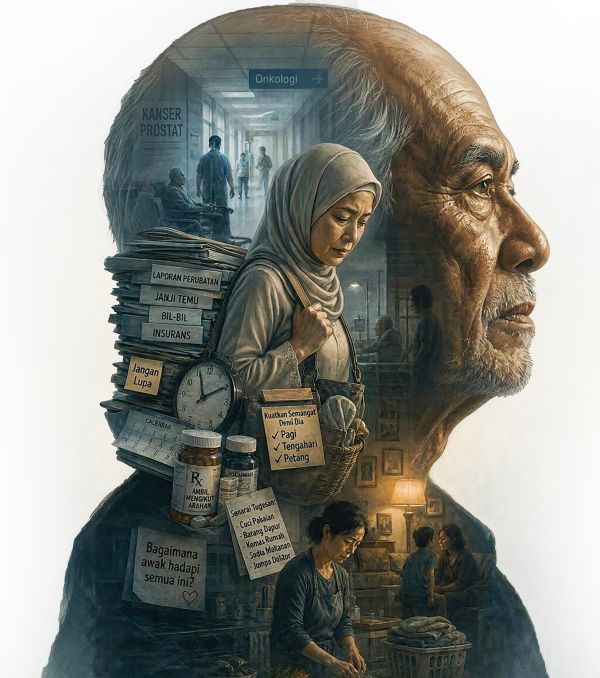
The diagnosis of prostate cancer profoundly impacts the entire family, as loved ones often take on the responsibility of caring for the patient. This caregiving role can be overwhelming, involving a delicate balance between professional careers, parental duties, and the emotional toll of supporting a sick family member. Registered Nurse Quah Sui Jing notes that caregiving often begins suddenly and intensifies as the cancer progresses.
"The burden of caregiving involves both physical and emotional aspects," Quah explained. "Besides helping manage appointments, they also provide emotional support to the patient. It can be very taxing."
To ease this burden, Quah offers guidance, including using medication schedules and appointment reminders. She advises caregivers to assist when necessary but to allow patients to maintain independence when possible. Learning how to help with daily routines like bathing and ensuring safe movement within the home is crucial. Open communication is vital, as some patients may hide pain or distress to avoid worrying their families.
While mild symptoms can often be managed at home or with a family doctor's help, seeking professional medical advice is recommended. For more serious symptoms like shortness of breath or vomiting, immediate contact with the medical team or a visit to the emergency department is necessary. Caregivers should also encourage healthy habits like light exercise, a balanced diet, and adequate hydration. Crucially, caregivers must also acknowledge their own limits and prioritize self-care, recognizing it as a necessity, not a luxury. Sharing responsibilities with other family members is also encouraged.
The burden of caregiving involves both physical and emotional aspects. Besides helping manage appointments, they also provide emotional support to the patient. It can be very taxing.
DistantNews Editorial
Originally published by Utusan Malaysia in Malay. Translated, summarized, and contextualized by our editorial team with added local perspective. Read our editorial standards.
More Stories
From Our Blog

What Gets Lost (and Found) When News Is Translated

The Critical Role of Diaspora Media in Global News

What Travellers Should Know About Countries with Restricted Press

A Digital Nomad's Guide to Following Local News

How the Same Story Looks Different in Different Countries
