


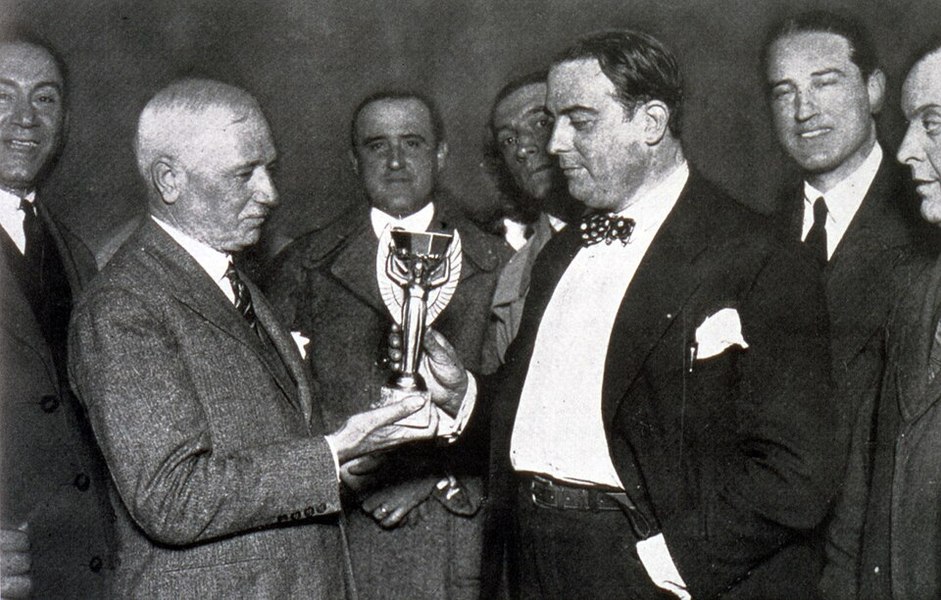
The Incredible Story of the First World Cup: A Final with Two Balls and a Missing Trophy; Europeans Boycotted the Tournament
Translated from Romanian, summarized and contextualized by DistantNews.
At a glance
In-depth
Sources not specified
Context piece
- The first FIFA World Cup in 1930 was marked by unique challenges, including the use of two different balls in the final match.
- European nations largely boycotted the inaugural tournament, which was held in Uruguay.
- FIFA, founded in 1904 by European football enthusiasts, aimed to unify international football regulations and organize global competitions.
The inaugural FIFA World Cup in 1930 was a pioneering event, born from a passion for football and a desire to formalize international competition. Held 96 years ago in Uruguay, the tournament was a significant undertaking, especially considering the nascent state of international football organization at the time.
Organizing matches between national teams was a rare occurrence, often arranged through direct discussions between federations. Recognizing the growing global appeal of football, Robert Guerin, a young sports journalist from France, was instrumental in establishing a governing body. In 1904, he, along with representatives from six other national football federations, founded the Fédération Internationale de Football Association (FIFA) in Paris.
FIFA's initial rules were based on the English Football Association's code, establishing the standard of 11 players per team, 90-minute matches, and the offside rule. Despite initial reluctance from the dominant British football associations, FIFA steadily expanded its membership across Europe and beyond, with South Africa joining in 1909 and several South American nations following soon after.
The 1930 World Cup itself faced significant hurdles. European teams largely boycotted the event, partly due to the long and costly sea voyage to Uruguay. The final match between Uruguay and Argentina was a notable affair, famously featuring two different balls – one chosen by Argentina and another by Uruguay – to start each half. The tournament's original trophy also later disappeared, adding to its legendary status.
DistantNews Editorial
Originally published by Adevărul in Romanian. Translated, summarized, and contextualized by our editorial team with added local perspective. Read our editorial standards.
More Stories

From Our Blog

What Gets Lost (and Found) When News Is Translated

The Critical Role of Diaspora Media in Global News

What Travellers Should Know About Countries with Restricted Press

A Digital Nomad's Guide to Following Local News

How the Same Story Looks Different in Different Countries
