


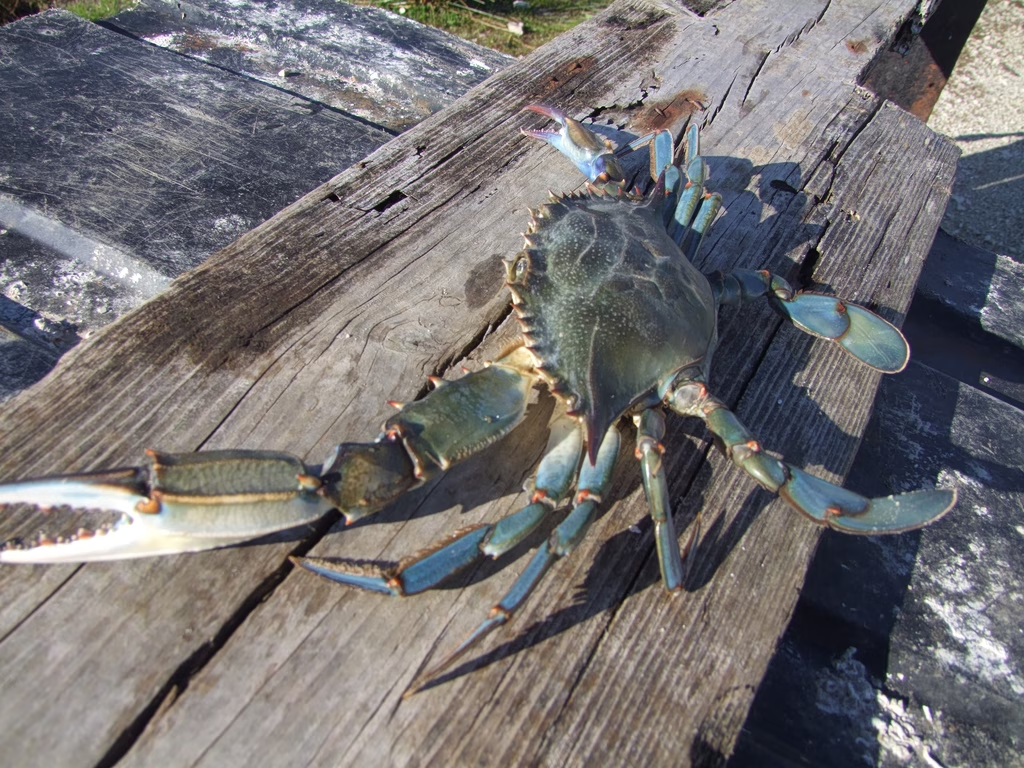
The "Italian visitor" in Pineios Delta: A fisherman's nuisance and a delicacy
Translated from Greek, summarized and contextualized by DistantNews.
At a glance
News
Named sources
Context piece
- The blue crab, known locally as "Italos," is a common sight in the Pineios River Delta, Greece, often getting caught in fishing nets.
- While an invasive species originating from the Atlantic, it has adapted to the Greek environment and is considered a delicacy by locals.
- Fishermen find the crab a nuisance due to net damage but also appreciate its tasty meat, often enjoyed as a summer meze.
In the waters where the Pineios River meets the Aegean Sea, a distinctive blue crab, affectionately nicknamed "Italos" by locals, has become a familiar, albeit sometimes troublesome, resident. Characterized by its striking blue extremities, powerful claws, and assertive nature, this crab has been a consistent part of the local ecosystem for years.
The blue crab, we've encountered it here for many years, and especially in the summer, the Pineios estuary fills with them. The locals here, like in Thermaikos, call it 'Italos'.
From late spring through summer, blue crabs appear in large numbers in the river delta. They frequently become entangled in fishing nets, causing damage to equipment and complicating the daily lives of those who depend on fishing in the Pineios and the Aegean. This invasive species, scientifically known as Callinectes sapidus, originates from the western Atlantic coast but has fully adapted to the Greek environment, according to research by the Region of Central Greece on alien species.
Nikos Ngas, tourism advisor for the Municipality of Agia, explained that the crab has been known to locals for decades. The name "Italos" is linked to an old narrative suggesting the species arrived in Greece via Italians during World War II, though scientists believe it more likely arrived in Europe through ship ballast tanks. Regardless of its origin, the blue crab is now a common sight, integrated into the daily lives of people living and working by the Pineios.
They cut the nets and create many problems. Their claws are strong like pliers and can even injure the fisherman.
For fishermen like Giorgos Georgakis, the blue crab presents a dual reality. "They cut the nets and create many problems. Their claws are strong like pliers and can even injure the fisherman," he described. Despite these challenges, the crab's culinary appeal is undeniable. "Its meat is very tasty and has a distinct flavor. Here, we prepare it as a meze and share it with tsipouro and friends," Georgakis added, highlighting how the "invader" has become a cherished part of local summer cuisine.
Its meat is very tasty and has a distinct flavor. Here, we prepare it as a meze and share it with tsipouro and friends.
DistantNews Editorial
Originally published by Ta Nea in Greek. Translated, summarized, and contextualized by our editorial team with added local perspective. Read our editorial standards.
More Stories



From Our Blog

What Gets Lost (and Found) When News Is Translated

The Critical Role of Diaspora Media in Global News

What Travellers Should Know About Countries with Restricted Press

A Digital Nomad's Guide to Following Local News

How the Same Story Looks Different in Different Countries
