

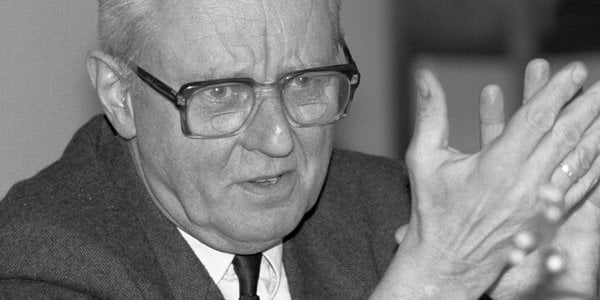
The last of his generation: Andrzej Wielowieyski showed what true civic patriotism meant
Translated from Polish and summarized by DistantNews. Read the original for the full story.
At a glance
In-depth
Named sources
Outcome reported
- Andrzej Wielowieyski, a former Home Army soldier, Catholic activist and Solidarity expert, died on Aug. 29 at the age of 98.
- A profile traces his identity to generations of Polish family history and to the combined traditions of land cultivation, responsibility and military courage.
- His memoir, “Against Fate,” presents a life spent adapting to political circumstances without surrendering his identity.
Andrzej Wielowieyski’s life carried the weight of dozens of generations. He died on Aug. 29 at the age of 98, leaving behind a biography that the profile presents as an example of genuine civic patriotism.
The family identity he described was built around the forest, the horse and cultivation. His ancestors had cleared forests in Podkarpacie a thousand years ago, while the symbols of the horse and the ploughed land shaped the Polish noble tradition in which he grew up.
The profile sees a tension in that tradition. The horse represented the steppe, movement and warfare. Cultivation meant responsibility for a particular piece of land and for the neighbors who depended on it. Polish nobles, it argues, managed to combine those opposing forces and shaped the country until the middle of the 20th century.
I chased him around his apartment in Warsaw, at 28 Aleje Ujazdowskie. My grandfather ran away with his hands clasped behind his back, just as my brother Stach and I still instinctively hold them today.
The Wielowieyski family history included a retainer of Bolesław Chrobry and Marcin of Wrocimowice, who appears in Jan Matejko’s famous painting of the Battle of Grunwald holding the great banner of the Kingdom of Poland. It also included Teodora, an ancestor who had two illegitimate children with Russian Emperor Paul.
Wielowieyski recalled his grandfather through a childhood image of chasing him around his Warsaw apartment while both held their hands clasped behind their backs. His memoir, published eight years ago, was titled “Against Fate.” The profile says the title does not describe a defeated fighter clinging to a lost cause. Instead, Wielowieyski’s family motto, “Cunning is better than surrendering to the fate of war,” captures the path it attributes to him: he resisted circumstances when necessary, survived and adapted without losing his identity. He became a soldier of the underground Polish state at 14.
Cunning is better than surrendering to the fate of war.
About this summary
Originally published by Rzeczpospolita in Polish. Translated, summarized, and contextualized automatically by DistantNews, with a note on how the source frames the story. Not individually reviewed before publishing. How this works.
More Stories

From Our Blog

What Gets Lost (and Found) When News Is Translated

The Critical Role of Diaspora Media in Global News

What Travellers Should Know About Countries with Restricted Press

A Digital Nomad's Guide to Following Local News

How the Same Story Looks Different in Different Countries
