


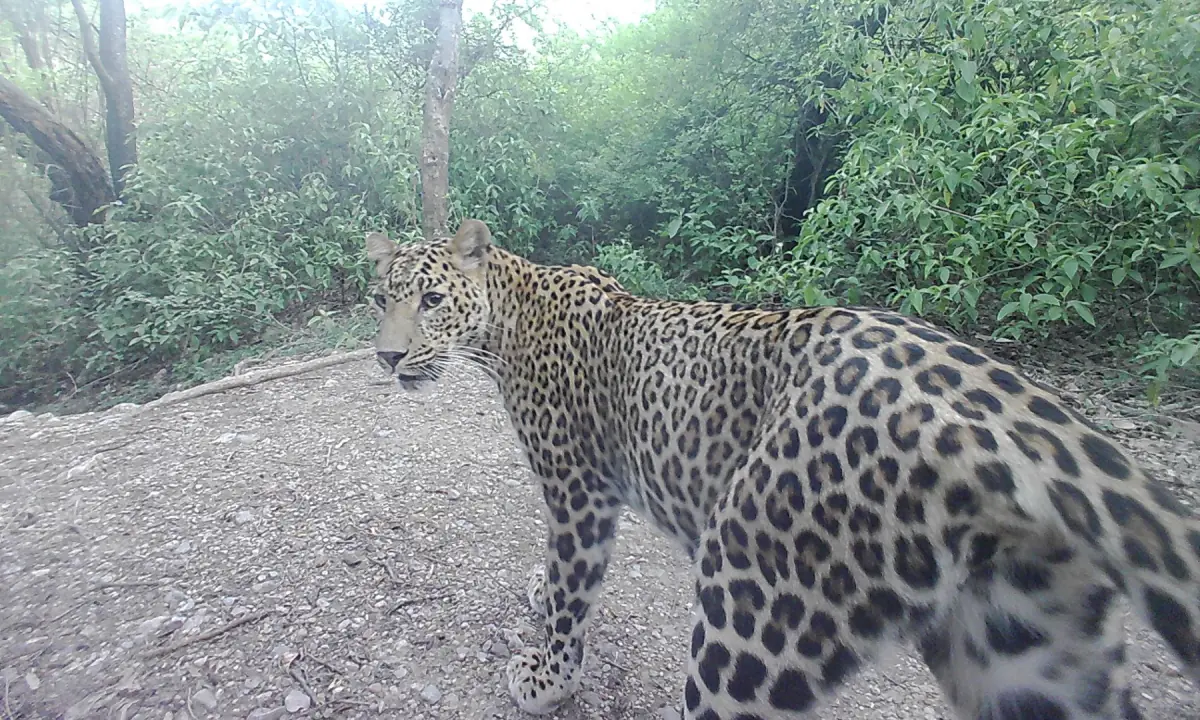
The leopard princess of Islamabad
Summarized and contextualized by DistantNews.
At a glance
In-depth
Sources not specified
Context piece
- A leopard skull and claw found in Islamabad's Margallah Hills in 2018 confirmed the presence of leopards in the area, previously unrecorded in historical accounts.
- Local reports and sightings over the years, including a zoo incident in 2005, suggested leopards inhabited the hills, challenging the lack of official documentation.
- The discovery has significantly altered the understanding of big cat habitats in Pakistan's capital, prompting further investigation into their presence and behavior.
The discovery of a leopard skull and claw in Islamabad's Margallah Hills in 2018 has fundamentally changed the understanding of wildlife in Pakistan's capital. A wildlife patrol found the remains at the top of Trail 6, with analysis confirming the animal was a fully grown leopard. This finding was significant because historical British gazetteers and local records made no mention of leopards in the Margallahs, focusing instead on smaller animals or species long extinct in the region.
Despite the lack of official documentation, local residents and hikers had long insisted on the presence of 'cheetay' (leopards) in the dense forests. Theories suggested these leopards might descend from the higher, snow-covered Murree Hills to the warmer Islamabad mountains as a winter retreat. Sightings were typically reported at night, and livestock disappearances in adjoining villages fueled these beliefs.
Adding to the anecdotal evidence, a leopard was captured in 2005 at Islamabad's Marghazar Zoo after causing a disturbance in a deer enclosure. This incident, occurring in broad daylight and during an unusual season for leopard activity, challenged perceptions about their behavior. In the 2010s, with the rise of smartphones, videos of leopards began circulating online, further substantiating local claims and prompting increased vigilance among hikers and park guards who reported hearing leopard roars at night.
DistantNews Editorial
Originally published by Dawn. Summarized and contextualized by our editorial team with added local perspective. Read our editorial standards.
More Stories



From Our Blog

What Gets Lost (and Found) When News Is Translated

The Critical Role of Diaspora Media in Global News

What Travellers Should Know About Countries with Restricted Press

A Digital Nomad's Guide to Following Local News

How the Same Story Looks Different in Different Countries
