


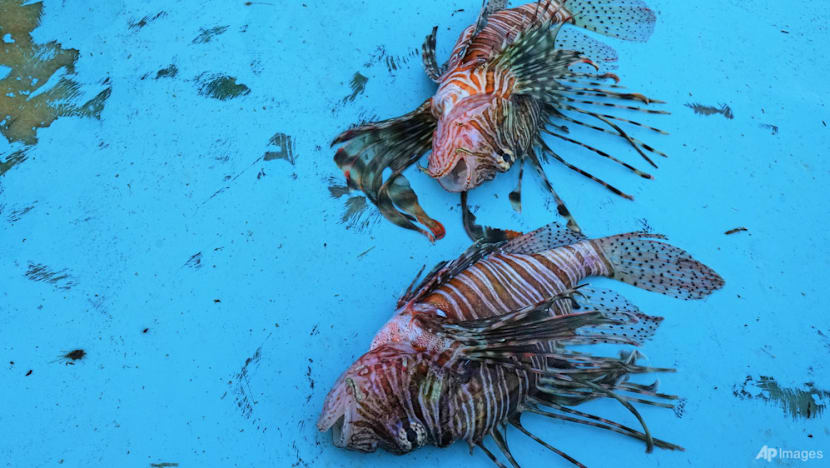
The Mediterranean's warming waters are drawing hundreds of invasive species
Summarized and contextualized by DistantNews.
At a glance
News
Named sources
Context piece
- Climate change is causing the Mediterranean Sea to warm significantly, leading to the introduction of hundreds of invasive fish species.
- These new species, such as the spotted pufferfish and lionfish, decimate native populations and disrupt marine biodiversity.
- Scientists warn that the Mediterranean's unique basin structure exacerbates warming, and urgent action to reduce fossil fuel use is needed to mitigate irreversible changes.
The Mediterranean Sea is undergoing profound and irreversible changes due to climate change, transforming it into a hostile environment for its native species. Scientists report that warming waters, driven primarily by the burning of fossil fuels, are facilitating the proliferation of hundreds of invasive species that are decimating indigenous populations.
Marine biologist Ernesto Azzuro described the Mediterranean as a "climate change hot spot," with sea temperatures projected to rise by 2°C to 6°C by 2100. The sea's enclosed basin structure prevents heat from dissipating effectively, unlike in the open oceans, making it particularly vulnerable to extreme heat waves. This warming trend has created a welcoming habitat for invasive species, including the voracious spotted pufferfish, which scientists have labeled the "worst invader."
The Mediterranean of our grandfathers, of our elders, and of the Greeks, of ancient Greece is lost forever. So many of those changes are irreversible.
These invasive species, many entering through the Suez Canal, are rapidly spreading westward towards France and Spain. While invasive species have been present for decades, their proliferation has accelerated since the early 2000s, coinciding with rising sea temperatures. The lionfish, first recorded in the eastern Mediterranean in 2012, has expanded rapidly, outcompeting native species like the red mullet, much to the dismay of local fishers. Similarly, rabbitfish consume algae, destroying habitats crucial for indigenous marine life.
Cyprus, due to its proximity to the Suez Canal, was among the first regions to experience the impact of these invasive fish. The diminishing presence of local varieties popular with consumers has significantly affected coastal communities' livelihoods. Scientists like Piero Genovesi Papik emphasize the urgent need to reduce fossil fuel consumption, stating that while solutions are known, they require a unified global approach. Approximately 1,000 invasive species have been identified in the Mediterranean, with 800 now firmly established, painting a grim picture of the sea's future biodiversity.
We know what should be done. We should reduce the use of fossil (fuels). But that’s definitely an urgent matter for the humanity, and we all know the solutions, but of course they require a global and joint vision.
DistantNews Editorial
Originally published by CNA. Summarized and contextualized by our editorial team with added local perspective. Read our editorial standards.
More Stories


From Our Blog

What Gets Lost (and Found) When News Is Translated

The Critical Role of Diaspora Media in Global News

What Travellers Should Know About Countries with Restricted Press

A Digital Nomad's Guide to Following Local News

How the Same Story Looks Different in Different Countries
