


The Memory of Stone, Water, and Cherries
Translated from Turkish, summarized and contextualized by DistantNews.
At a glance
In-depth
Sources not specified
Context piece
- The İvriz water source in Turkey's Ereğli district is a vital artery for history, faith, agriculture, and daily life, with ancient roots.
- An 8th-century BC rock monument at İvriz depicts King Varpalavas and the god Tarhundas, symbolizing the need for water and fertility.
- While İvriz offers hope with its revitalized water sources, the nearby Meke Lake serves as a stark reminder of environmental neglect.
The İvriz water source, located near Ereğli in Turkey's Konya province, is more than just a natural element; it is deeply intertwined with the region's history, faith, agriculture, and daily life. Visiting the source of the İvriz River in Halkapınar, about 12 kilometers from Ereğli, reveals how water is the main artery of existence here.
The İvriz Rock Monument, a significant structure from the Late Hittite period dating back to the 8th century BC and King Varpalavas, is carved into a rock face measuring approximately 4.20x4.20 meters. This monument is a testament to water, fertility, agriculture, and faith etched in stone. It depicts King Varpalavas and the god Tarhundas, who holds a bunch of grapes and ears of wheat while the king prays. Hieroglyphic inscriptions explain that Varpalavas planted these vines and prayed to Tarhundas for their fertility. This inscription is not merely a king's self-narration but an expression of the profound need for land, water, vines, wheat, and abundance.
Water is not just a part of nature here; it is the main artery of history, faith, agriculture, and daily life.
İvriz is recognized as one of the world's earliest written agricultural monuments. However, to truly understand İvriz, one must also listen to its surroundings. It is thought-provoking to see such a historically and naturally significant area, precisely where the water originates, intertwined with the carelessness of daily use.
This work is the embodiment of water, fertility, agriculture, and faith carved into stone.
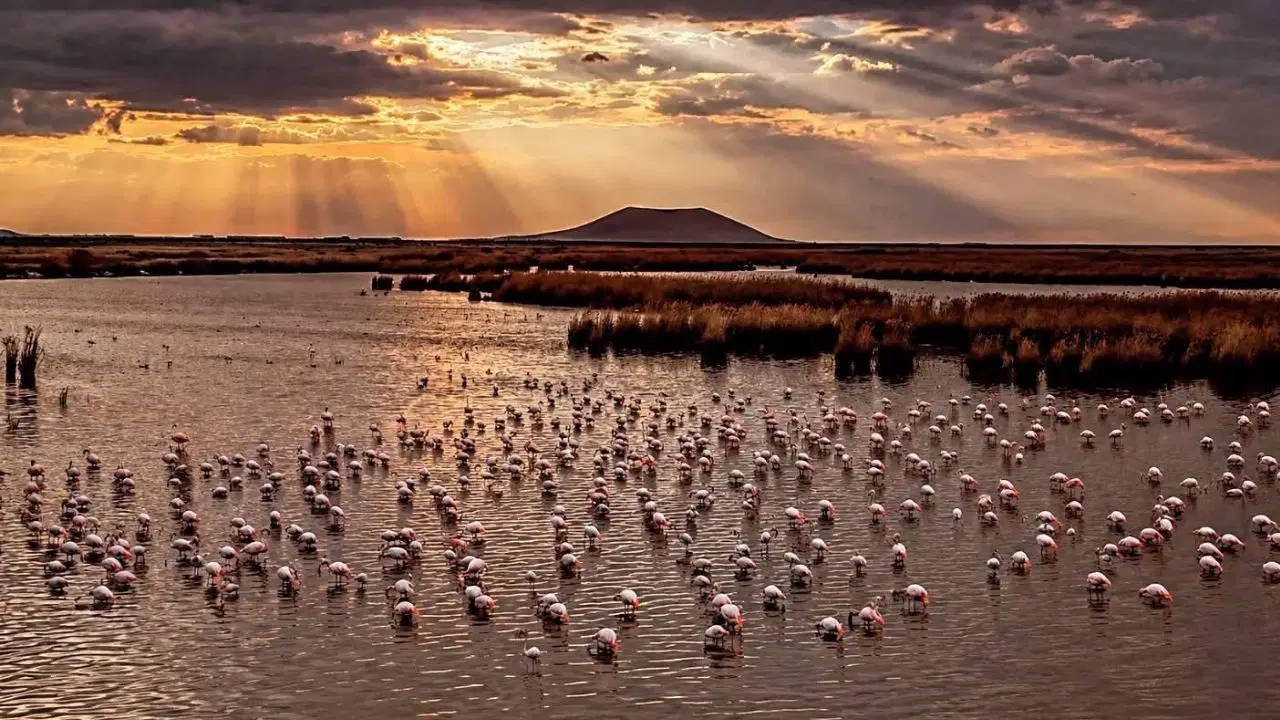
Ereğli's Akgöl Marshes, an ecosystem where lake, reeds, birds, and wind coexist, evokes a sense of refreshment. Fortunately, the region received ample rainfall this year, leading to the expansion of Akgöl and surrounding lake beds. Water has returned to some areas, the reeds have revived, and new habitats have opened for birds. Nature has once again demonstrated its willingness to repair itself when given the opportunity. Looking at Akgöl inspires hope, as the revival of a wetland signifies not just the return of water but also the return of migratory birds, the rustling of reeds in the wind, and the breathing of the earth. Nature sometimes tells us, "It's not too late," if we learn to leave it be, not obstruct its water, and not carelessly shrink its habitats.
Yet, alongside the hope offered by Akgöl, another reality stands: Meke remains desolate. Standing on the shore of Meke Lake, once called the "evil eye bead" of Turkey and even the world, evokes admiration followed by sadness. From a distance, Meke resembles the eye of a landscape, but that eye no longer just gazes at beauty; it also reflects our own neglect. Meke Lake, which once captivated people with its water, color, volcanic structure, and appearance, is still not the same as in its former days.
Nature sometimes tells us, 'It's not too late,' if we learn to leave it be, not obstruct its water, and not carelessly shrink its habitats.
DistantNews Editorial
Originally published by Cumhuriyet in Turkish. Translated, summarized, and contextualized by our editorial team with added local perspective. Read our editorial standards.
More Stories

From Our Blog

What Gets Lost (and Found) When News Is Translated

The Critical Role of Diaspora Media in Global News

What Travellers Should Know About Countries with Restricted Press

A Digital Nomad's Guide to Following Local News

How the Same Story Looks Different in Different Countries
