


The Secret to Lucrative Orchid Breeding in the Netherlands
Translated from Malay, summarized and contextualized by DistantNews.
At a glance
In-depth
Sources not specified
Context piece
- Orchid breeding is a complex, decade-long process that can yield hundreds of millions of dollars globally.
- Dutch company Floricultura uses genetic markers to accelerate breeding, allowing early selection of desirable traits like color and disease resistance.
- This advanced breeding technique, involving genetic markers and cloning, is a closely guarded trade secret, requiring significant investment.
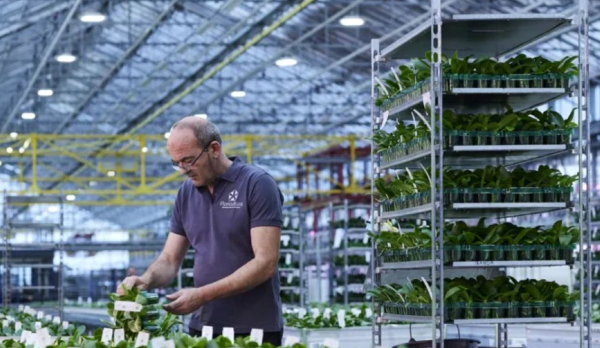
Developing new orchid varieties is a secretive and lucrative endeavor, often taking up to a decade before market release. While the global orchid market is worth hundreds of millions of dollars, intense competition drives breeders to produce more beautiful and unique flowers. In this race, laboratories are becoming as crucial as greenhouses.
Dutch orchid breeder Floricultura notes that centuries of human intervention through selective breeding have made the genetic background of many commercial orchids highly complex, making it difficult to predict new varieties. However, by developing genetic markers for specific traits such as color, shape, disease resistance, and flowering duration, Floricultura and its competitors aim to speed up selective breeding. Instead of waiting up to three years for the first flower, experts can now perform genetic screening on young plants, eliminating unsuitable ones early on.
"If thousands of crosses are produced from the lab, we can screen them based on genetic markers and select only those with the desired traits," says Wart van Zonneveld, Floricultura's Research and Development Manager. This new breeding technique is considered a vital trade secret, requiring strict control. Each company develops its own genetic markers and processes, as this is what allows them to create unique varieties. "We keep it to ourselves because the investment required is very large," he adds.
If thousands of crosses are produced from the lab, we can screen them based on genetic markers and select only those with the desired traits.
Paul Arens, a Ornamental Plant Breeding researcher at Wageningen University in the Netherlands, explains that the fundamental breeding process remains the same: selecting two plants with specific characteristics and crossing them. However, modern producers also utilize genomic research, genetic markers, and plant health studies to improve success rates. Genetics also plays a role in protecting intellectual property rights for new varieties. Companies want exclusive rights to commercialize their new orchids, preventing others from reproducing and reselling them. To gain legal protection, a variety must be proven distinct, stable, and uniform.
Breeding is described as an art of "elimination," discarding plants that fail to meet targets while simultaneously multiplying the best ones. At Floricultura, successful plants are no longer propagated from seeds but through cloning using meristems, cells that allow plants to continue growing throughout their lives. The exact techniques, however, remain a closely guarded secret.
We keep it to ourselves because the investment required is very large.
DistantNews Editorial
Originally published by Utusan Malaysia in Malay. Translated, summarized, and contextualized by our editorial team with added local perspective. Read our editorial standards.
More Stories



From Our Blog

What Gets Lost (and Found) When News Is Translated

The Critical Role of Diaspora Media in Global News

What Travellers Should Know About Countries with Restricted Press

A Digital Nomad's Guide to Following Local News

How the Same Story Looks Different in Different Countries
