

'The Son of Blackness sings to freedom': Santa Lucía celebrates 25 years of a festival preserving Afro-Caribbean memory
Translated from Spanish, summarized and contextualized by DistantNews.
At a glance
News
Sources not specified
New plan
- Santa Lucía is celebrating the 25th anniversary of the National Son de Negro Festival, a vibrant event featuring body painting, drumming, and dance.
- The festival has been recognized as a National Historic, Ethnic, and Cultural Heritage site, highlighting its importance in preserving Afro-Caribbean memory.
- The Son de Negro is described as a manifestation of communication, history, and resistance for Afro-descendant populations, celebrating freedom and peace.
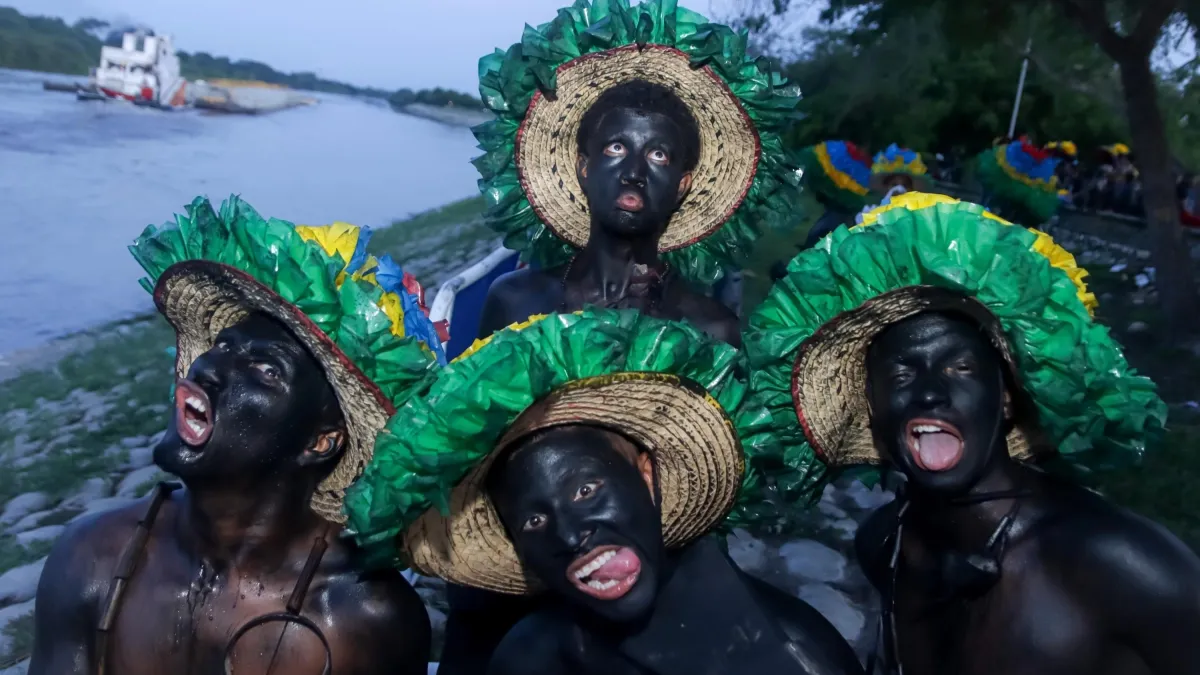
The town of Santa Lucía, nestled in the southern Atlantic region of Colombia, is alive with the vibrant colors and pulsating rhythms of its 25th National Son de Negro Festival. From August 14 to 16, the streets are filled with the sounds of the "tambor alegre," the spectacle of painted bodies, and the energetic movements of dancers, marking the return of this cherished cultural celebration.
This year's anniversary holds particular significance as the festival has been officially declared National Historic, Ethnic, and Cultural Heritage. This recognition, coupled with a recent law acknowledging the practices and expressions of Afro-diasporic Song Dances of the Colombian Caribbean as Intangible Cultural Heritage, underscores the festival's crucial role in preserving the memory and identity of the region's Afro-descendant communities.
Cultural researcher Luis Ricardo Navarro Díaz emphasizes that the Son de Negro transcends mere festivity. He explains it as a profound expression of communication, history, and resistance for Afro-descendant populations settled along the Canal del Dique. The festival's elements, drums, ancestral sounds, oral traditions, and body movements, intertwine with natural elements, narrating the daily life and connection to the territory of a Caribbean shaped by water.
Navarro describes the Son de Negro as a song to freedom, peace, and the construction of a territory rooted in joy. Its narratives reflect the daily struggles and aspirations of a Caribbean people advocating for a Colombia that respects nature, embraces diversity, and cherishes life. His research, published in the book "Son de Negro, ¡Vive!," presents this ancestral manifestation as a way of life that upholds the values and cosmologies of Colombia's Black communities.
The festival brings together 40 groups from the departments of Atlántico, Bolívar, and La Guajira for three days of performances, competitions, discussions, and culinary experiences. The "Son de Negro" is more than a dance; it is a living testament to resilience, a vibrant celebration of heritage, and a powerful voice for peace and freedom in the Colombian Caribbean.
DistantNews Editorial
Originally published by El Tiempo in Spanish. Translated, summarized, and contextualized by our editorial team with added local perspective. Read our editorial standards.
More Stories
From Our Blog

What Gets Lost (and Found) When News Is Translated

The Critical Role of Diaspora Media in Global News

What Travellers Should Know About Countries with Restricted Press

A Digital Nomad's Guide to Following Local News

How the Same Story Looks Different in Different Countries
