


The state secret behind Pyongyang's dynasty: Why Kim Jong Un shuns his mother's past
Translated from Romanian, summarized and contextualized by DistantNews.
At a glance
News
Sources not specified
Context piece
- North Korean leader Kim Jong Un has never publicly mentioned his mother, Ko Yong-hui, due to ideological vulnerabilities surrounding the regime's 'Paektu bloodline' narrative.
- The official propaganda links the Kim dynasty to the mythical Mount Paektu, but Kim Jong Un's mother was born in Japan to ethnic Korean immigrants, contradicting this lineage.
- This maternal origin is considered a major ideological threat to the stability of the North Korean dictatorship, which emphasizes hereditary purity.
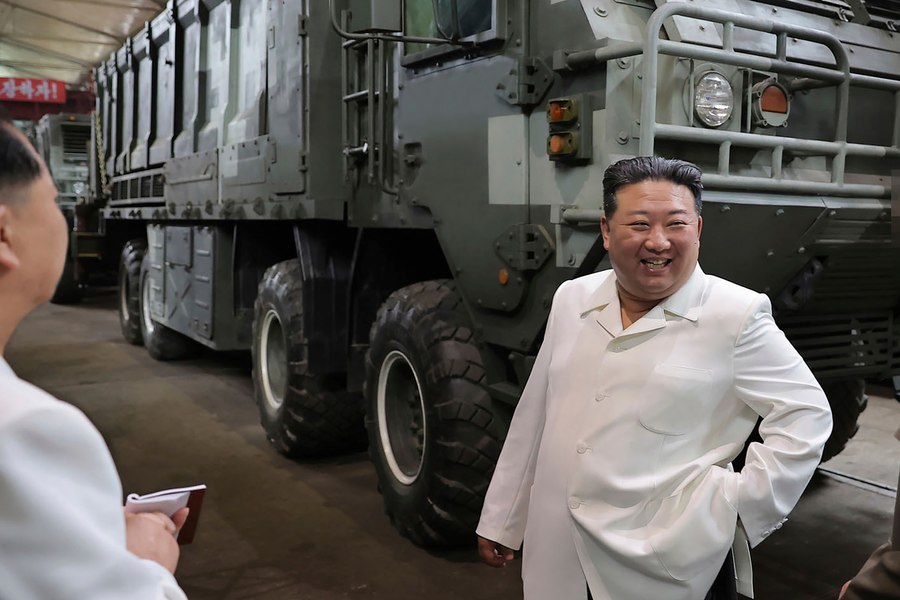
North Korean leader Kim Jong Un maintains a strict taboo around his mother, Ko Yong-hui, never mentioning her name in public during his 15 years in power. This biographical detail is a closely guarded secret, rooted in the very foundation of the regime's legitimacy.
The absolute power of Kim Jong Un is built upon the so-called 'Paektu bloodline,' a direct lineage tracing back to the mythical founder of the Korean people. In a nation obsessed with 'hereditary purity,' the true origin of the current leader's mother presents a significant ideological vulnerability that could threaten the dictatorship's stability, according to BBC reports.
Official propaganda from Pyongyang places the dynasty's origins on Mount Paektu, a sacred site on the North Korea-China border. Local mythology claims this is the birthplace of Dangun, the founder of the first Korean kingdom. Later, Kim Il-sung, the father of North Korea, allegedly used the mountain as a guerrilla base against Japanese occupation, and his son, Kim Jong-il, was said to be born on its slopes, though historical documents suggest his birth likely occurred in Russia.
However, the genealogical reality of the maternal line starkly contradicts this narrative. Kim Jong Un's mother, Ko Yong-hui, was born in Osaka, Japan, in 1952, to a family of immigrants from Jeju Island, now part of South Korea. Her family belonged to the 'Zainichi' community, Koreans who settled in Japan during the colonial period. Around the age of 10, Ko and her family emigrated to North Korea, drawn by a repatriation program promising an idyllic life with free access to education, housing, and jobs. Approximately 93,000 Koreans from Japan fell for this propaganda trap.
Initially viewed with envy for the consumer goods they brought from the capitalist world, the repatriates were soon labeled 'jjaepo' by the regime. This is a derogatory term for those deemed 'contaminated' by foreign and dangerous ideologies. North Korean society operates under a rigid social classification system called songbun, a caste-like structure. Within this hierarchy, the 'jjaepo' community is categorized within the 'wavering class,' highlighting the stigma associated with their origins.
Kim Jong-un became heir at a very young age, without any political or military achievements behind him. His only argument was the Paektu bloodline.
DistantNews Editorial
Originally published by Adevărul in Romanian. Translated, summarized, and contextualized by our editorial team with added local perspective. Read our editorial standards.
More Stories


From Our Blog

What Gets Lost (and Found) When News Is Translated

The Critical Role of Diaspora Media in Global News

What Travellers Should Know About Countries with Restricted Press

A Digital Nomad's Guide to Following Local News

How the Same Story Looks Different in Different Countries
