


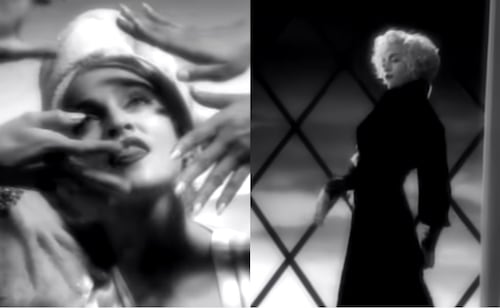
The Story Behind Madonna's 'Vogue': How Ballroom Culture Hit the Mainstream
Translated from Spanish, summarized and contextualized by DistantNews.
At a glance
In-depth
Sources not specified
Context piece
- Madonna's 1990 hit song "Vogue" brought the underground voguing dance style to global mainstream audiences.
- Voguing originated in New York's Black and Latino queer ballroom communities in the 1960s-80s as a form of self-expression and resistance.
- The dance style, inspired by poses from Vogue magazine, evolved from static movements to more fluid and dramatic performances, with Madonna collaborating with ballroom dancers for her iconic music video.
Madonna's 1990 chart-topping song "Vogue" catapulted a vibrant underground dance style into global consciousness, but the dance itself has a rich history rooted in New York's ballroom scene. Voguing emerged from the Black and Latino queer communities in Harlem between the 1960s and 1980s, offering a vital space for self-expression and competition through dance and drag.
Inspired by the poses of models in Vogue magazine, voguing developed an exaggerated aesthetic characterized by sharp arm movements, theatricality, and elegance. Participants, often belonging to "houses", support networks for those rejected by family, competed in battles that resembled beauty pageants. These "houses" adopted names from European fashion brands, symbolizing aspiration and identity.
The dance form served not only as a creative outlet but also as a powerful means of storytelling and a form of resistance, particularly during the HIV/AIDS crisis. By the late 1980s, voguing evolved from more static poses to incorporate fluid movements, dramatic dips, and dynamic spins, reflecting a growing expressiveness within the community.
Madonna's engagement with voguing began in 1990 after visiting the Sound Factory club in New York. Collaborating with producer Shep Pettibone, she infused her song with the essence of the dance. For the "Vogue" music video, she worked closely with dancers from the ballroom culture, including members of the House of Xtravaganza, such as José Gutiérrez. These artists helped shape the choreography, and some even toured with Madonna, bringing the ballroom aesthetic to a worldwide audience.
I know a place where you can get away / it’s called a dance floor, and here’s what it’s for
DistantNews Editorial
Originally published by El Universal in Spanish. Translated, summarized, and contextualized by our editorial team with added local perspective. Read our editorial standards.
More Stories

From Our Blog

What Press Freedom Means for the News You Read

What Gets Lost (and Found) When News Is Translated

The Critical Role of Diaspora Media in Global News

What Travellers Should Know About Countries with Restricted Press

A Digital Nomad's Guide to Following Local News
