


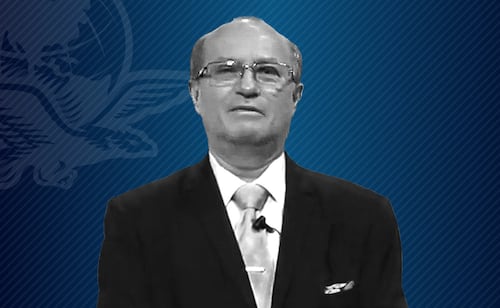
The Vatican's Urgent Call for Human-Centered Governance of Artificial Intelligence
Translated from Spanish, summarized and contextualized by DistantNews.
At a glance
News
Named sources
Context piece
- The Vatican has entered the debate on artificial intelligence, warning against lethal autonomous weapons systems (LAWS).
- Pope Francis stated that no algorithm can make war morally acceptable, emphasizing the preservation of human dignity.
- The Church calls for a human-centered governance of AI, particularly in military applications, to prevent a decisive step towards dehumanization.
The Vatican has issued a strong call for a human-centered approach to artificial intelligence governance, directly addressing the urgent ethical challenges posed by AI, particularly in the military sphere. A central tenet of this call is the unequivocal assertion that "no algorithm is capable of making war morally acceptable."
This statement, made during the presentation of the encyclical Magnifica Humanitas, marks the Catholic Church's significant entry into the digital age's defining debates. The Church is urging the disarmament of AI and condemning Lethal Autonomous Weapons Systems (LAWS). Its core thesis posits that when technology shifts moral responsibility to automated calculations, the very essence of human condition is at stake, not merely technical progress.
The Vatican's intervention arrives at a critical juncture. Autonomous drones are already operational in conflict zones like Ukraine, Gaza, and the Lebanese border. AI algorithms are increasingly involved in target selection for bombings based on metadata patterns. Major global powers are channeling significant military budgets towards quantum computing and language models applied to warfare.
The Church frames its appeal not as a pious exhortation but as a stark warning: allowing machines to decide matters of life and death crosses a decisive threshold, accelerating human dehumanization. It challenges the long-held notion in the computing industry that technology is morally neutral. The Vatican argues that advanced AI, processing vast data to predict markets, diagnose illnesses, or calculate missile trajectories, fundamentally substitutes human judgment.
This substitution carries particular gravity in the military context. The automation of lethal force transforms the act of taking a human life, an act laden with profound ethical weight, into a mathematical optimization problem. An AI programmed to detect "hostile patterns" lacks compassion, cannot comprehend context, and possesses no moral flexibility to disobey unjust orders, highlighting the profound risks of ceding such decisions to machines.
There is no algorithm capable of making war morally acceptable.
DistantNews Editorial
Originally published by El Universal in Spanish. Translated, summarized, and contextualized by our editorial team with added local perspective. Read our editorial standards.
More Stories



From Our Blog

What Press Freedom Means for the News You Read

What Gets Lost (and Found) When News Is Translated

The Critical Role of Diaspora Media in Global News

What Travellers Should Know About Countries with Restricted Press

A Digital Nomad's Guide to Following Local News
