


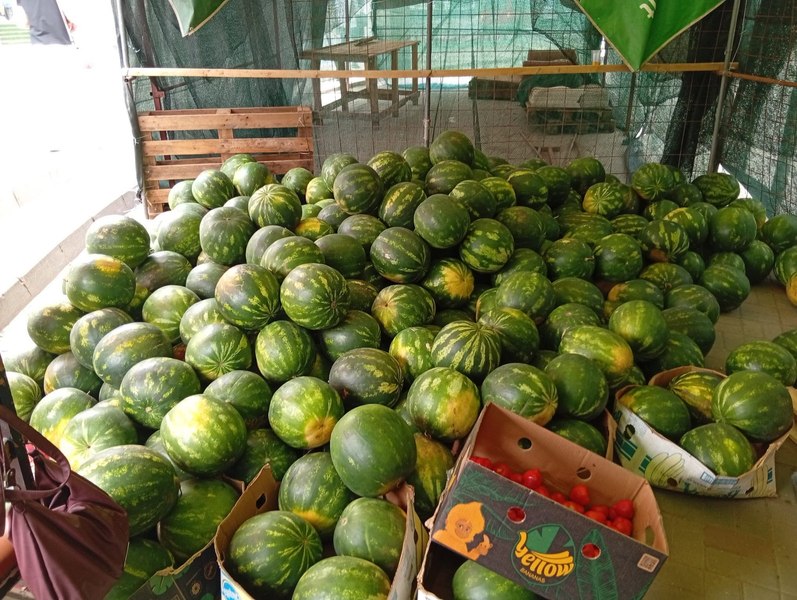
The watermelon spot that signals sweetness: What to look for before buying
Translated from Romanian, summarized and contextualized by DistantNews.
At a glance
News
Sources not specified
Context piece
- A specific spot on the underside of a watermelon can indicate its sweetness and ripeness.
- Experts say a creamy white or pale spot suggests the fruit was picked too early, while a yellow or dark cream spot indicates it ripened sufficiently on the vine.
- Avoid watermelons with multiple small, sunken, or moldy spots, which may signal rot or fungal infections.
Choosing a ripe and sweet watermelon might be simpler than many consumers realize, with a key indicator lying on its underside. This spot, known as the "field spot," is where the fruit rested on the ground as it grew.
A creamy white spot on the underside of a watermelon appears exactly where the fruit rested on the ground during its development. That's why there is usually only one such spot.
According to horticultural specialists, the color and size of this field spot offer crucial clues about the watermelon's maturity. A pale white or small spot may suggest the watermelon was harvested prematurely, resulting in a less sweet and less flavorful fruit. Conversely, a spot that is yellow or dark cream colored indicates the fruit spent adequate time ripening naturally on the vine, promising a sweeter taste.
If the spot is very pale, almost white, or small in size, there is a high chance that the watermelon was harvested before it fully ripened in the field.
Experts also advise consumers to be wary of watermelons with multiple small, sunken, or moldy spots, as these can be signs of rot or fungal infections rather than natural field marks. The texture of the spot is also important; it should feel firm and smooth, similar to the rest of the rind. Soft, spongy, or moist areas could mean the fruit is spoiled.
A yellow or dark cream spot indicates that the fruit stayed on the field longer and had enough time to ripen naturally.
Beyond the field spot, other external cues can help in selecting a good watermelon. Fine, shiny lines on the rind are normal, but a pronounced, dark, web-like pattern can signify excellent pollination and a sweeter fruit. The rind's color also matters: a light green, glossy rind might mean it was picked too soon, while a dark green, matte rind typically indicates ripeness. A yellow or orange spot is considered an even better sign of sweetness and high sugar content.
Avoid watermelons that have multiple small, white or gray spots, especially if they are sunken or show signs of mold.
DistantNews Editorial
Originally published by Adevărul in Romanian. Translated, summarized, and contextualized by our editorial team with added local perspective. Read our editorial standards.
More Stories



From Our Blog

What Gets Lost (and Found) When News Is Translated

The Critical Role of Diaspora Media in Global News

What Travellers Should Know About Countries with Restricted Press

A Digital Nomad's Guide to Following Local News

How the Same Story Looks Different in Different Countries
