


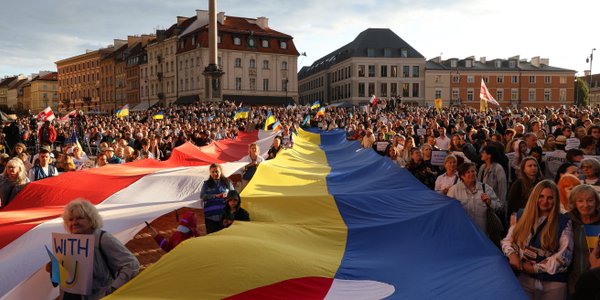
They fear speaking Ukrainian and struggle to build relationships with Poles, study finds
Translated from Polish and summarized by DistantNews. Read the original for the full story.
At a glance
News
Named sources
Context piece
- University of Warsaw researchers found that some Ukrainians in Poland fear speaking Ukrainian publicly and have difficulty forming friendships with Poles.
- Sociologist Dominika Blachnicka-Ciacek said integration requires effort from both immigrants and the host society, which she said does not always take that step.
- The qualitative research included 165 interviews and found that rising hostility could erode the goodwill built after Russia’s full-scale invasion.
Ukrainians living in Poland are increasingly afraid to speak their own language in public, while even those who speak fluent Polish and work alongside Poles say friendships remain difficult to form. Sociologist Dominika Blachnicka-Ciacek of the University of Warsaw said the change is affecting their sense of safety and could destroy the goodwill built between the two communities after Russia’s full-scale invasion.
“Even Ukrainians who speak Polish fluently and work with Poles very often admit that it is not particularly easy to become friends with us,” Blachnicka-Ciacek told PAP. She said migration research treats integration as a two-way process. Immigrants learn the language, work and take part in social life, but the host society must also be ready to accept new residents as part of the community.
In her assessment, Ukrainians are generally open to integration with Poles, but Poles do not always want to take that step. The researcher also observed a growing fear among Ukrainians about using Ukrainian in public, a feeling she said had not previously been evident. Data from the Stand with Ukraine foundation indicated that the first clear rise in hostility came during last year’s presidential campaign.
Even Ukrainians who speak Polish fluently and work with Poles very often admit that it is not particularly easy to become friends with us.
The research examined Ukraine’s diaspora in Poland, including people who arrived before 2022 and members of Poland’s Ukrainian minority. Researchers conducted 115 interviews in the main qualitative study and another 50 on issues including social-media use. They also observed diaspora events such as poetry evenings, stand-up performances and the collective making of camouflage nets for units fighting at the front.
Blachnicka-Ciacek said the Ukrainian diaspora is among the world’s largest, with an estimated population of up to 20 million. More than 1 million Ukrainians lived in Poland before 2020, she said, and roughly the same number arrived afterward. During the first months of the war, 70 percent of Polish society helped Ukrainians and 7 percent took them into their homes. Growing hostility now threatens to weaken that earlier solidarity.
This feeling of fear seems to be something that was not there before.
About this summary
Originally published by Rzeczpospolita in Polish. Translated, summarized, and contextualized automatically by DistantNews, with a note on how the source frames the story. Not individually reviewed before publishing. How this works.
More Stories


From Our Blog

What Gets Lost (and Found) When News Is Translated

The Critical Role of Diaspora Media in Global News

What Travellers Should Know About Countries with Restricted Press

A Digital Nomad's Guide to Following Local News

How the Same Story Looks Different in Different Countries
