


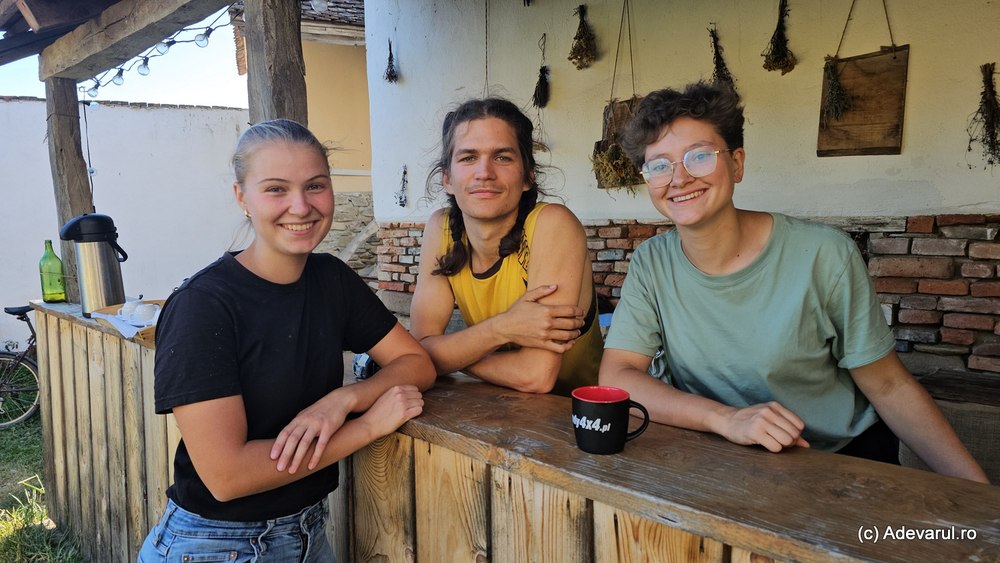
“They never truly return home. That world has disappeared”: Young Germans preserve Transylvania’s Saxon heritage
Translated from Romanian and summarized by DistantNews. Read the original for the full story.
At a glance
In-depth
Named sources
Context piece
- Johanna, Nikolas and Luisa are spending about six months in Apold, Romania, caring for its medieval fortified church and welcoming visitors.
- The village’s Saxon community declined after World War II and largely emigrated to Germany and Austria after 1990.
- Restoration projects have helped save the church from collapse, while the CasApold Association seeks to revive it as a cultural venue.
Three young Germans now care for a fortified church in Apold, a Transylvanian village where the Saxon community that once centered its spiritual life there has nearly disappeared.
Johanna, Nikolas and Luisa arrived in Romania through a volunteer program and are spending about six months in the village. They look after the church, receive visitors and help with cultural activities around the monument. During their stay, they have also begun learning Romanian.
The medieval complex, about 20 kilometers from Sighișoara in Mureș County, includes the fortified church, towers and defensive walls. Founded in the 13th century, it preserves traces of Apold’s former Saxon community. In 1941, the village had 1,382 residents, including 680 Saxons.
They never truly return home. That world has disappeared.
World War II and its aftermath severely affected the community. Thirty-six Saxons from Apold died at the front, while 75 men and women were deported to forced labor in the Soviet Union in January 1945. The community later dwindled under communism, and almost all remaining Saxons left for Germany and Austria after 1990. By 1996, only two Saxons remained in the village.
The church also deteriorated after losing the community that had maintained it for centuries. In 2003, members of what became the CasApold Association joined emergency repairs to prevent its collapse. Donations, local contributions and European funding later supported restoration and conservation. The church is now used for cultural events, exhibitions and craft workshops. The association says it wants to create a sustainable, active place filled with cultural activity.
Our vision is to reuse the fortified church sustainably and create a dynamic, lively place full of cultural activities.
About this summary
Originally published by Adevărul in Romanian. Translated, summarized, and contextualized automatically by DistantNews, with a note on how the source frames the story. Not individually reviewed before publishing. How this works.
More Stories



From Our Blog

What Gets Lost (and Found) When News Is Translated

The Critical Role of Diaspora Media in Global News

What Travellers Should Know About Countries with Restricted Press

A Digital Nomad's Guide to Following Local News

How the Same Story Looks Different in Different Countries
