


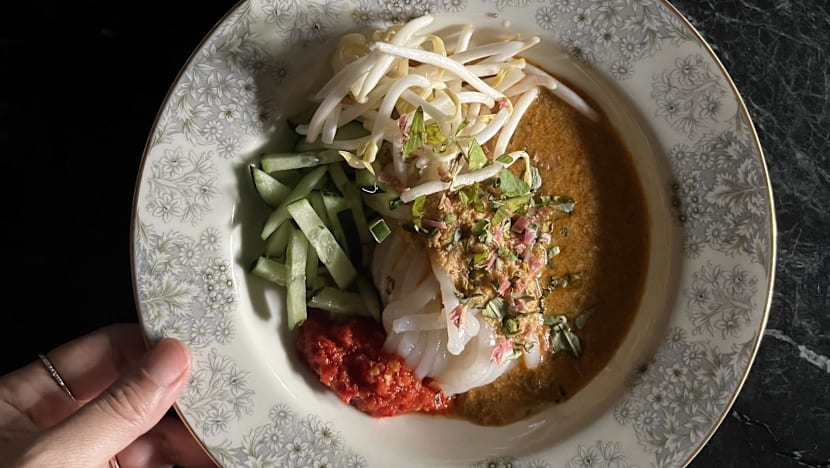
Think Katong laksa is Singapore's original laksa? Meet laksa Siglap, its lesser-known predecessor
Summarized and contextualized by DistantNews.
At a glance
In-depth
Named sources
Context piece
- Laksa Siglap, a lesser-known predecessor to Singapore's famous Katong laksa, offers a taste of the nation's culinary past.
- Its fish-based broth and handmade noodles connect it to regional laksas like laksa Johor, distinguishing it from the thinner, herb-laden Katong version.
- The word 'laksa' itself refers to the noodles, with origins tracing back to Persian influences on Malay cuisine.
Long before Katong laksa became a Singaporean icon, another dish simmered in the kampungs of Siglap. Laksa Siglap, with its robust, fish-and-kerisik-based broth and handmade noodles, offers a gastronomic glimpse into an older Singapore. "Laksa Siglap belongs to the same pedigree as laksa Johor or laksa Riau," said Khir Johari, author of The Food Of Singapore Malays. He calls it Laksa Singapura in his book, noting, "it was our first laksa."
Laksa Siglap belongs to the same pedigree as laksa Johor or laksa Riau.
Its gravy is typically laced with Spanish mackerel and topped with cucumbers, beansprouts, and julienned herbs. This contrasts with the more common Katong laksa, which journalist Azimin Saini observed, "Where was the familiar fish broth and why was the rempah so… thin? All the delicious herbs and greens that make it a bright dish to have at lunch were also absent."
it was our first laksa
Saini, who grew up eating his mother's laksa Siglap, realized Singapore had two distinct types of laksa. "Both are delicious and unique in their own way," he stated.
When I first tried Katong laksa, I didn’t get it. Where was the familiar fish broth and why was the rempah so… thin? All the delicious herbs and greens that make it a bright dish to have at lunch were also absent.
Johari further explained that "laksa" refers to the rice-and-sago noodles used in the dish, similar to how "mee" describes noodles in other dishes. The noodles themselves have diverse origins, with "mee" coming from Southern China, dried vermicelli from Thailand (hence mee Siam), and "laksa" possibly originating from Persia, where it meant "vermicelli, macaroni, or long slices of paste put into broth."
It was then that I realised it was a different type of laksa, that in Singapore we have two types and not just one. Both are delicious and unique in their own way.
DistantNews Editorial
Originally published by CNA. Summarized and contextualized by our editorial team with added local perspective. Read our editorial standards.
More Stories



From Our Blog

What Gets Lost (and Found) When News Is Translated

The Critical Role of Diaspora Media in Global News

What Travellers Should Know About Countries with Restricted Press

A Digital Nomad's Guide to Following Local News

How the Same Story Looks Different in Different Countries
