


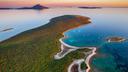
This Hidden Island is Called the Croatian Maldives: Reached Only by Boat, It Offers Undisturbed Peace
Translated from Croatian, summarized and contextualized by DistantNews.
At a glance
In-depth
Sources not specified
Context piece
- The uninhabited island of Zeča, located in the Kvarner Bay near Cres, is described as a hidden Adriatic gem and "Croatian Maldives" due to its turquoise waters and tranquility.
- Accessible only by private boat or organized tours, Zeča offers an escape from mass tourism with its pristine nature, quiet coves, and lack of amenities like cafes or restaurants.
- The island, covering 2.55 square kilometers, features diverse bays, a lighthouse, and serves as a state-managed wildlife breeding ground for rabbits, pheasants, and wild ducks.
In the Kvarner Bay, not far from Cres, lies the uninhabited islet of Zeča, a true sanctuary for those seeking peace and untouched nature. Its greatest charm lies precisely in what it lacks: the crowds of summer.
While the most famous Adriatic beaches are packed during peak season, there are still hidden pearls offering a completely different experience. One such gem is located in Kvarner Bay, just a twenty-minute boat ride from Martinšćica on the island of Cres. This is the uninhabited island of Zeča, a piece of paradise that has been spared mass tourism due to its inaccessibility. Visitors arriving on its shores are greeted by crystal-clear, turquoise waters that irresistibly resemble exotic tropical destinations. It is this incredible sea color, combined with the absolute silence broken only by birdsong and the sound of waves, that leads many to rightly call Zeča the "Croatian Maldives."
What makes Zeča truly special is not just its natural beauty, but precisely what is absent. Forget cafes, restaurants, loud music, or queues for ice cream. On this island, untouched nature and absolute peace reign supreme – a luxury that has become more valuable than any other amenity in today's world. The shores are mostly low and easily accessible, surrounded by shallow waters ideal for family swimming. The island hides several beautiful coves, the most famous being Slanci cove on the west side. It is also the largest and most visited, providing a safe anchorage for boaters seeking refuge from the summer bustle. Even in the height of the season, crowds are an unknown concept here.
Zeča covers an area of approximately 2.55 square kilometers, with a sparsely indented coastline measuring 9.6 kilometers. Composed of Upper Cretaceous limestones, the island is predominantly barren, with its highest point at 67 meters above sea level. Besides the aforementioned Slanci cove, the western coast also features Lupeška and Stari Mrgari coves, the latter's name suggesting the island was historically used for sheep grazing. On the eastern side are Dražica, Ustrinski portić, and the unique Pećina cove. The sea around the island gradually deepens, but it is very shallow between Zeča and the nearby islets of Pregaznik and Seka. Precisely because of these navigational hazards, a lighthouse was built on the southwestern part of the island.
The island's name is believed to originate from the rich colony of wild rabbits that once inhabited it. Today, Zeča is a state-managed wildlife breeding ground, so in addition to rabbits, pheasants and wild ducks can be found here, and the island is also an important nesting site for seagulls. There are no regular ferry lines to this hidden corner of the Adriatic; access is exclusively by private boat or as part of organized excursions, which often include a visit to the Blue Cave on Cres. Visitors must bring absolutely everything they need for the day – from water and food to umbrellas. Although the eastern coast is ideal for daytime anchoring...
DistantNews Editorial
Originally published by Večernji List in Croatian. Translated, summarized, and contextualized by our editorial team with added local perspective. Read our editorial standards.
More Stories



From Our Blog

What Gets Lost (and Found) When News Is Translated

The Critical Role of Diaspora Media in Global News

What Travellers Should Know About Countries with Restricted Press

A Digital Nomad's Guide to Following Local News

How the Same Story Looks Different in Different Countries
