


Three-Lined Beetle Rash Mistaken for Shingles, Experts Warn
Translated from Vietnamese, summarized and contextualized by DistantNews.
At a glance
News
Named sources
Context piece
- A common mistake is confusing skin inflammation caused by the three-lined beetle with shingles, leading to improper self-treatment.
- The beetle's toxin, Pederin, causes severe skin irritation upon contact, often occurring when the insects enter homes after rain or during harvest season.
- Proper first aid involves gently removing the beetle without crushing it and immediately washing the affected skin to minimize damage.
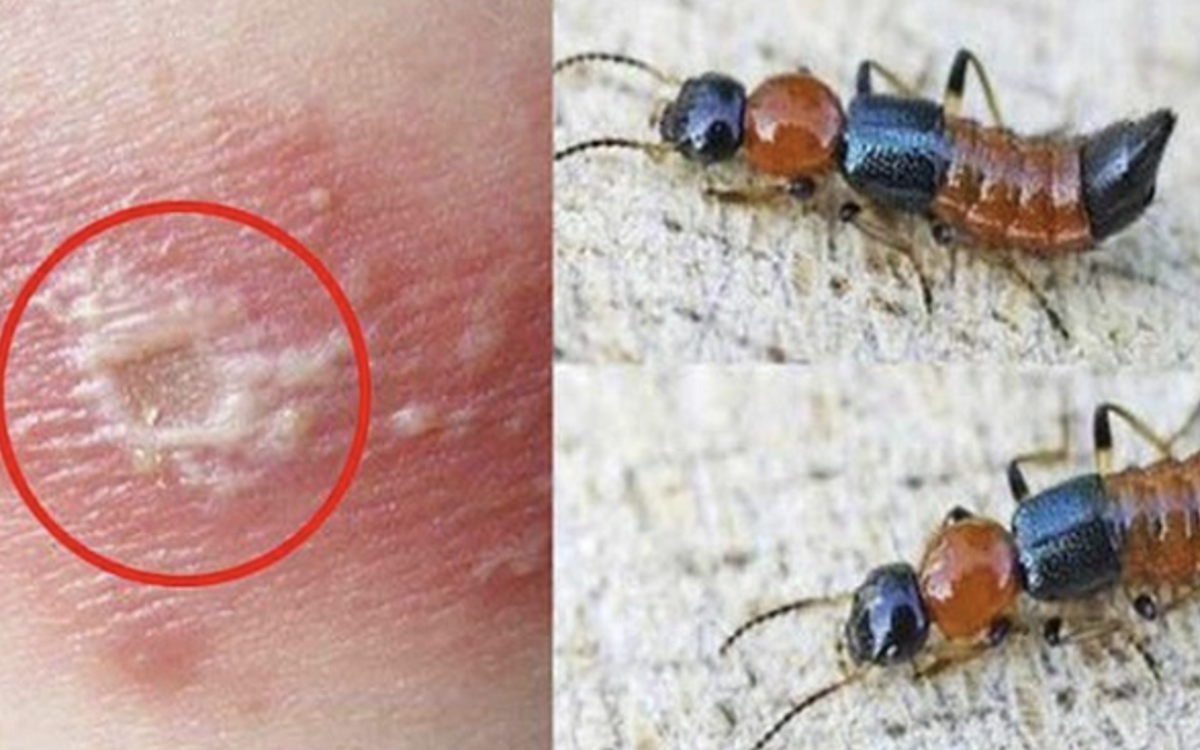
Skin lesions resembling burns and blisters can be mistaken for shingles, but they are often caused by the three-lined beetle, a common insect in Vietnam. This misdiagnosis leads many to use folk remedies or inappropriate treatments, worsening the condition and potentially causing infection and scarring.
The three-lined beetle does not bite or sting. Skin damage occurs when people come into contact with a toxin called Pederin, found in the insect's body.
According to Dr. Nguyen Huu Truong, Deputy Director of the Center for Allergy and Clinical Immunology at Bach Mai Hospital, the three-lined beetle does not bite or sting. Instead, skin damage occurs when people come into contact with a toxin called Pederin, found in the insect's body. Pederin is a potent irritant that causes severe dermatitis.
These beetles often fly into homes seeking light, especially during harvest season or after storms. When people see them crawling on their skin, their natural reaction is to swat or crush them. This action releases Pederin, which directly contacts the skin. The toxin can also transfer to hands and then spread to the face, eyes, or other body parts.
This action releases Pederin, which directly contacts the skin. The toxin can also transfer to hands and then spread to the face, eyes, or other body parts.
Dr. Truong warns that self-treating these lesions with antiviral drugs meant for shingles is ineffective. Furthermore, applying folk remedies like plant leaves can damage the skin's protective barrier, creating an entry point for bacteria, leading to infection, necrosis, and permanent scars. The correct first step after contact is to gently remove the beetle by blowing it away or using paper, then immediately wash the affected area thoroughly with water.
Self-treating these lesions with antiviral drugs meant for shingles is ineffective. Furthermore, applying folk remedies like plant leaves can damage the skin's protective barrier, creating an entry point for bacteria, leading to infection, necrosis, and permanent scars.
DistantNews Editorial
Originally published by Tuổi Trẻ in Vietnamese. Translated, summarized, and contextualized by our editorial team with added local perspective. Read our editorial standards.
More Stories

From Our Blog

What Gets Lost (and Found) When News Is Translated

The Critical Role of Diaspora Media in Global News

What Travellers Should Know About Countries with Restricted Press

A Digital Nomad's Guide to Following Local News

How the Same Story Looks Different in Different Countries
