


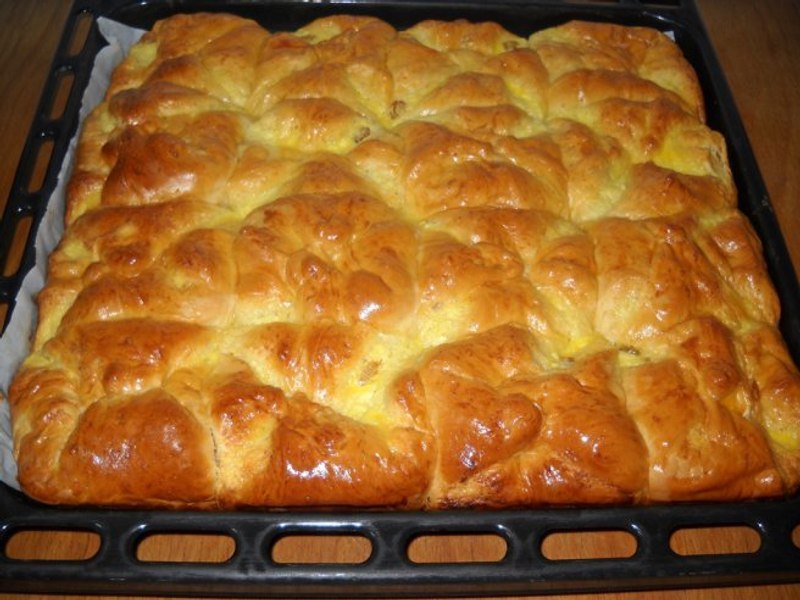
Three stars of Romanian pastry: Traditional treats that win you over from the first bite
Translated from Romanian, summarized and contextualized by DistantNews.
At a glance
In-depth
Sources not specified
Context piece
- Romania boasts a rich tradition of authentic pastry-making, with unique regional specialties passed down through generations.
- While often rustic, these traditional Romanian pastries offer exceptional taste and culinary satisfaction, differing from more refined European counterparts.
- Three specific traditional Romanian pastries, including the unique Moldavian 'Poale-n Brâu', are highlighted for their historical significance and authentic recipes.
While European nations like France and Italy are celebrated for their patisserie, Romania possesses its own extraordinary tradition of authentic pastry-making. These creations, often originating from village kitchens, have been passed down through generations, offering unique flavors and culinary heritage.
Romanian pastries, though perhaps lacking the delicate refinement of French or Italian counterparts, often surpass them in taste, aroma, and a distinct rustic charm. Dishes like 'plăcinte' (pies), 'învârtite' (swirls), and 'tolănite' are hearty and satisfying, designed to keep people full for hours – a practical necessity for village life.
Many of these indigenous baked goods are unique even on a European scale, yet sadly, they are becoming increasingly rare, especially in urban settings. The article aims to shed light on three of the most authentic and delicious Romanian pastry examples.
Leading the selection is 'Poale-n Brâu,' a celebrated Moldavian delicacy, particularly from the Upper Moldova region. Its name, translating to 'folds in the belt,' references the traditional Moldavian attire where women would tuck their skirts into their belts while working. The pastry's shape mimics this.
The original peasant recipe for 'Poale-n Brâu' differs significantly from modern, urbanized versions. These were substantial, filling pastries, often given away during winter memorial services ('Moșii de iarnă'). The authentic recipe involves a dough made with flour, eggs, milk, butter, sugar, and yeast, filled with sheep's cheese and eggs.
DistantNews Editorial
Originally published by Adevărul in Romanian. Translated, summarized, and contextualized by our editorial team with added local perspective. Read our editorial standards.
More Stories


From Our Blog

What Gets Lost (and Found) When News Is Translated

The Critical Role of Diaspora Media in Global News

What Travellers Should Know About Countries with Restricted Press

A Digital Nomad's Guide to Following Local News

How the Same Story Looks Different in Different Countries
