


'Thrift' in Vietnam: Optimizing public resources with constructive thinking
Translated from Vietnamese, summarized and contextualized by DistantNews.
At a glance
Analysis
Sources not specified
Context piece
- The Vietnamese concept of 'Kiệm' (thriftiness) is crucial for optimizing public resources after mergers.
- President Ho Chi Minh defined 'Kiệm' not as stinginess, but as scientific organization to avoid waste of time and effort.
- Applying 'Kiệm' involves streamlining administrative structures, eliminating redundancies, and ensuring public funds deliver real value.
The Vietnamese concept of 'Kiệm,' or thriftiness, is presented as a vital principle for effectively managing public resources in the post-merger era. Following the integration of various entities, the greatest challenge lies in practicing 'Kiệm' to optimize these consolidated resources. Mergers are not merely mechanical additions of personnel or departments; they represent a revolution in efficiency aimed at eliminating both visible and invisible waste that burdens administrative machinery.
Saving, not being extravagant, not wasteful, not disorganized.
President Ho Chi Minh's interpretation of 'Kiệm' elevates it beyond mere frugality. In his 1949 work "Cần Kiệm Liêm Chính" (Diligence, Thrift, Integrity, Justice), he defined 'Kiệm' as "saving, not being extravagant, not wasteful, not disorganized." He further emphasized that "thrift is not stinginess." For Ho Chi Minh, true thrift meant understanding scientific organization, recognizing that "knowing how to organize saves effort and time." He considered waste of time and organizational weakness as the greatest forms of waste.
Thrift is not stinginess. When there is something worth doing, something beneficial to the people and the country, then regardless of the effort or cost, one should be willing.
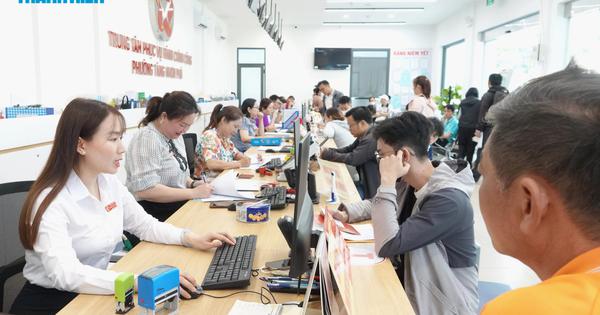
Applying this philosophy to current administrative mergers, 'Kiệm' becomes the measure of a leader's constructive thinking. It does not advocate for extreme budget cuts that paralyze operations. Instead, it calls for the courage to redesign administrative structures, eliminate overlapping intermediaries, and ensure that every unit of public funding yields tangible value. The article highlights the example of the Public Service Center in Tang Nhon Phu ward, Ho Chi Minh City, which bustles with activity, processing over 400 applications daily during peak times.
Knowing how to organize saves effort and time. Not knowing how to organize means not knowing how to save.
Ho Chi Minh famously stated that 'Cần' (diligence) and 'Kiệm' must go hand-in-hand, like two legs of a person. He warned that diligence without thrift is like a leaky barrel, losing all that is poured in. Conversely, thrift without diligence leads to stagnation. This dialectical relationship offers a solution to post-merger performance issues. When resources are consolidated, a lack of scientific planning and organization ('Kiệm') can quickly overwhelm the new structure, even with diligent efforts ('Cần'). The essence of mergers, therefore, is to use 'Kiệm', scientific organization, to support 'Cần,' enabling officials to work more productively and driving a qualitative leap from mere quantity.
Diligence and thrift must go hand-in-hand, like two legs of a person.
DistantNews Editorial
Originally published by Thanh Niên in Vietnamese. Translated, summarized, and contextualized by our editorial team with added local perspective. Read our editorial standards.
More Stories

From Our Blog

What Gets Lost (and Found) When News Is Translated

The Critical Role of Diaspora Media in Global News

What Travellers Should Know About Countries with Restricted Press

A Digital Nomad's Guide to Following Local News

How the Same Story Looks Different in Different Countries
