


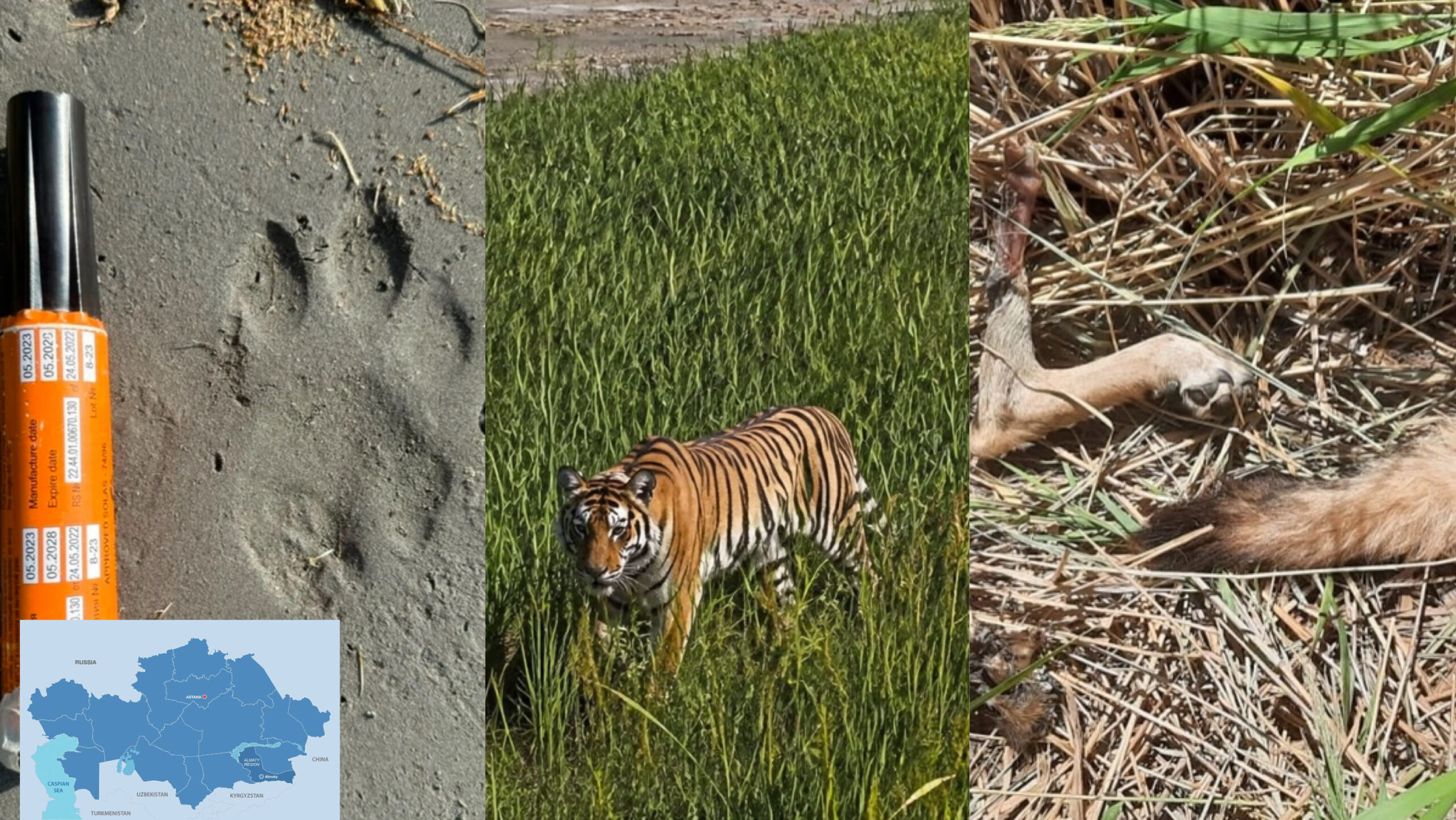
Tigress Umit Shows Signs of Successful Adaptation in Kazakhstan’s Ile-Balkhash Reserve
Summarized and contextualized by DistantNews.
At a glance
News
Sources not specified
Ongoing story
- Tigress Umit, released into Kazakhstan's Ile-Balkhash State Nature Reserve on July 31, shows positive signs of adapting to the wild.
- Umit has successfully hunted a wolf and a wild boar in her first 10 days, with her movements monitored 24/7 via GPS tracker.
- Kazakhstan's tiger reintroduction program, ongoing since 2010, aims to restore the species with tigers also transferred from the Netherlands and Russia.
Tigress Umit, reintroduced to Kazakhstan's Ile-Balkhash State Nature Reserve on July 31, is demonstrating promising signs of adaptation to her new wild environment. Anuarbek Bermagambetov, head of the Department of Hunting Management and Wildlife, reported on Aug. 24 that Umit's initial hunting behavior, including successfully preying on a wolf and a wild boar within her first 10 days, suggests a strong start to the reintroduction program.
Her progress is meticulously tracked via a GPS device that transmits her location and direction every 12 hours. While GPS data provides movement patterns, specialists will conduct field visits to confirm the specific prey species she is catching. Umit remains within the reserve's designated green zone, a vast area of over 450,000 hectares, minimizing any immediate threat to nearby settlements. The reserve employs a tiered alert system with green, yellow, and red zones to manage potential conflicts, utilizing a specialized team equipped with vehicles, night-vision devices, and satellite communication for monitoring and intervention if she approaches the yellow zone.
Should Umit enter the red zone, authorities will issue mobile warnings to nearby residents. Initial efforts to guide her back to the green zone will involve sound and pyrotechnic devices, with temporary sedation as a last resort. This reintroduction is part of a long-term effort initiated in 2010, which has involved establishing the reserve, restoring its wildlife, and developing necessary infrastructure. Kazakhstan has received tigers from various sources, including Bogdan and Puma from the Netherlands earlier this year, and four more from Russia, including Umit, under a bilateral agreement. The reserve's ecosystem supports potential prey such as kulan, wild boar, roe deer, and Bukhara deer, crucial for the tigers' survival and independent hunting capabilities.
Umit’s first recorded prey was a wolf, followed several days later by a wild boar. According to Bermagambetov, her hunting behavior in the first 10 days suggests she is adapting well to her new environment.
DistantNews Editorial
Originally published by The Astana Times. Summarized and contextualized by our editorial team with added local perspective. Read our editorial standards.
More Stories


From Our Blog

What Gets Lost (and Found) When News Is Translated

The Critical Role of Diaspora Media in Global News

What Travellers Should Know About Countries with Restricted Press

A Digital Nomad's Guide to Following Local News

How the Same Story Looks Different in Different Countries
