


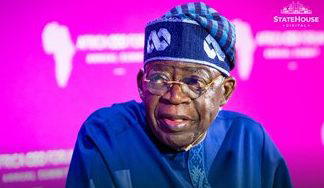
Tinubu defends FCT’s TSA exit, commissions Body of Benchers Annex, Law School Quarters
Summarized and contextualized by DistantNews.
At a glance
News
Named sources
New plan
- President Bola Tinubu defended the Federal Capital Territory Administration's (FCTA) exit from the Treasury Single Account (TSA).
- He stated this move provides financial flexibility to fast-track infrastructure development in Abuja.
- Tinubu also commissioned judiciary and legal sector projects, emphasizing infrastructure provision as a constitutional duty, not executive interference.
President Bola Tinubu has defended his administration's decision to remove the Federal Capital Territory Administration (FCTA) from the Treasury Single Account (TSA), asserting that the move grants crucial financial flexibility for accelerating infrastructure projects and modernizing Abuja. The President, represented by the Secretary to the Government of the Federation, Senator George Akume, made these remarks while commissioning two key projects in the legal sector.
When we pulled the FCT Administration out of the Treasury Single Account (TSA), there were skeptics. There were those who questioned the wisdom of that financial liberation. But we did it because we knew that local administration must have the liquidity, the speed and the corporate flexibility to interface with financial institutions and deliver critical projects without bureaucratic strangulation. Today, the results are glaring.
Tinubu argued that liberating the FCTA from the TSA allows for greater liquidity, speed, and corporate flexibility, enabling the administration to interface effectively with financial institutions and deliver essential projects without bureaucratic hurdles. He credited the Minister of the Federal Capital Territory, Nyesom Wike, with translating this policy into tangible results, including resolving a long-standing land title issue for the Nigerian Law School.
When I appointed Minister Wike, I gave him a clear mandate to transform Abuja into a modern, functional and world-class capital city. Over the last three years, the scale of infrastructural development, urban renewal and project delivery in the FCT has been unmatched.
Furthermore, President Tinubu dismissed claims that providing infrastructure for the judiciary constitutes executive interference. He clarified that supporting the legal and judicial arms with adequate facilities is a constitutional responsibility of the Executive branch, aimed at fostering operational efficiency and excellence. The commissioning of an office annex for the Body of Benchers and staff quarters at the Nigerian Law School underscored this commitment, with Tinubu stressing the necessity of decent infrastructure for producing competent legal professionals.
Let me be absolutely clear: the provision of infrastructure for the legal community and the judiciary is not an interference in the independence of another arm of government. Rather, it is a constitutional and collaborative duty of the Executive to ensure that those who interpret and uphold our laws are provided with an environment that fosters operational efficiency and excellence.
DistantNews Editorial
Originally published by Vanguard. Summarized and contextualized by our editorial team with added local perspective. Read our editorial standards.
More Stories



From Our Blog

How the Same Story Looks Different in Different Countries

What Gets Lost (and Found) When News Is Translated

The Critical Role of Diaspora Media in Global News

What Travellers Should Know About Countries with Restricted Press

A Digital Nomad's Guide to Following Local News
