


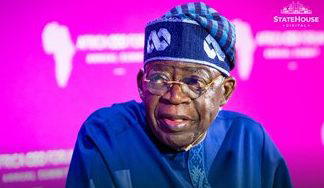
Tinubu: Economic reforms end states' reliance on salary borrowing
Translated from English, summarized and contextualized by DistantNews.
At a glance
News
Named sources
New plan
- President Bola Tinubu stated that his administration's economic reforms have ended states' reliance on borrowing for salaries.
- He attributed this to significantly increased revenue allocations enabling states to pay salaries, gratuities, and fund development projects.
- The reforms are also credited with improving GDP, foreign reserves, and overall economic indicators, with states receiving substantially more revenue.
President Bola Tinubu announced that his administration's economic reforms have liberated Nigerian states from the necessity of borrowing to meet salary obligations. He stated that increased revenue allocations now empower state governments to consistently pay workers, settle gratuities, and initiate development projects.
Our economic reforms are improving governance because all the economic indicators are pointing in a positive direction, from our GDP to our foreign reserves and other economic indices.
Speaking through the National Chairman of the All Progressives Congress (APC), Prof. Nentawe Yilwatda, at the flag-off of a road rehabilitation project in Plateau State, Tinubu highlighted the positive economic trajectory. He asserted that the reforms have strengthened the economy, leading to significant improvements in revenues flowing to the states. "Our economic reforms are improving governance because all the economic indicators are pointing in a positive direction, from our GDP to our foreign reserves and other economic indices," he said.
No state receives less than three to four times what it used to receive.
Tinubu emphasized the substantial increase in state revenues, noting that "No state receives less than three to four times what it used to receive." This financial improvement, he explained, allows states to undertake projects without resorting to loans or bonds. He contrasted this with the situation before his administration, where "over 30 states were owing salaries," a problem he claims has been resolved as "no state is owing salaries today."
Before we came into office, over 30 states were owing salaries. Today, no state is owing salaries because the improved revenue allows them to pay salaries, gratuities and also embark on developmental projects.
The President also highlighted the Babban-Lamba–Sharam Phase II Road project in Plateau State as a strategic federal highway designed to stimulate economic growth. This road will connect Plateau with neighboring states, enhancing trade and movement across the North-Central and North-East regions. The administration is currently undertaking 61 road projects in the North-Central zone, with several completed and many more under construction or undergoing emergency intervention.
This project is not just a road. It will connect communities, businesses, families and farmlams. It will improve security, reduce travel time by over 100 kilometres and create prosperity across Northern Nigeria.
DistantNews Editorial
Originally published by Vanguard in English. Translated, summarized, and contextualized by our editorial team with added local perspective. Read our editorial standards.
More Stories


From Our Blog

How the Same Story Looks Different in Different Countries

What Gets Lost (and Found) When News Is Translated

The Critical Role of Diaspora Media in Global News

What Travellers Should Know About Countries with Restricted Press

A Digital Nomad's Guide to Following Local News
