


Tinubu Rejects Bishops' Economic Critique, Emir of Kano Echoes Concerns
Translated from English, summarized and contextualized by DistantNews.
At a glance
Analysis
Named sources
Context piece
- Nigerian Catholic Bishops expressed concerns to President Tinubu about economic hardship, insecurity, and a drift toward a one-party state.
- President Tinubu rejected their assessment, stating his economic policies are working and have rescued the economy.
- Former CBN Governor Sanusi II and Cardinal Onaiyekan echoed the bishops' criticisms, warning about the ineffectiveness of policies that don't improve welfare.
A recent meeting between Nigerian President Bola Ahmed Tinubu and the Catholic Bishops of Nigeria Conference took a sharp turn when the bishops presented a memorandum detailing widespread economic hardship, escalating insecurity, and concerns about Nigeria's slide toward a one-party system.
However, President Tinubu dismissed the bishops' assessment outright. He asserted that his economic policies are proving successful and that Nigerians should be grateful for his efforts in preventing the economy's collapse. This response has drawn further criticism from prominent figures.
when a nation is bleeding, you cannot expect a polite meeting with the Head of State. We had to let him know.
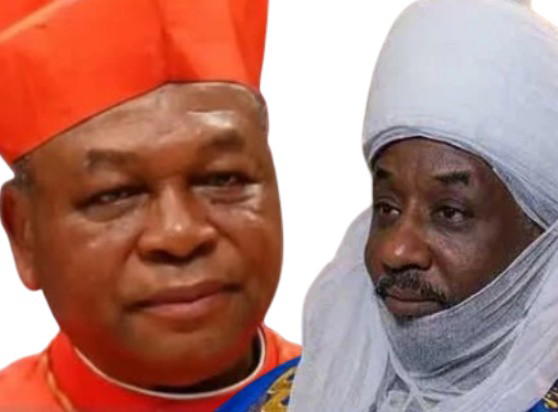
Cardinal John Onaiyekan, Archbishop Emeritus of Abuja and a key member of the bishops' delegation, reinforced their message in a subsequent television interview. He stated that when a nation is in distress, polite meetings are insufficient, and leaders must be informed of the harsh realities.
any economic policy that does not improve the welfare of the people is inherently ineffective.
Similarly, Muhammadu Sanusi II, the Emir of Kano and former Governor of the Central Bank of Nigeria, voiced similar concerns at a separate event. Despite being a self-proclaimed friend of President Tinubu and an advocate for some of his policies, Sanusi II warned that any economic policy failing to improve public welfare is inherently ineffective. He acknowledged Nigeria's achievements but highlighted persistent political instability, ethnic and religious tensions, insecurity, poverty, and economic hardship.
The author argues that both Sanusi II's and the bishops' assessments are correct and represent valuable feedback for President Tinubu. The article questions why the government rejects such criticisms, suggesting the President has become detached from the populace and is intellectually insulated. The government, it posits, interprets most criticisms as political hostility or a lack of economic understanding, only heeding advice from international bodies like the World Bank and IMF, foreign embassies, or global leaders. Domestic accountability, the piece suggests, is viewed as a nuisance, especially with weakened domestic institutions like the legislature, opposition parties, and civil society organizations offering less sustained critique.
the country has recorded notable achievements, but continues to face political instability, ethnic and religious tensions, insecurity, poverty and economic hardship.
DistantNews Editorial
Originally published by Vanguard in English. Translated, summarized, and contextualized by our editorial team with added local perspective. Read our editorial standards.
More Stories


From Our Blog

How the Same Story Looks Different in Different Countries

What Gets Lost (and Found) When News Is Translated

The Critical Role of Diaspora Media in Global News

What Travellers Should Know About Countries with Restricted Press

A Digital Nomad's Guide to Following Local News
