


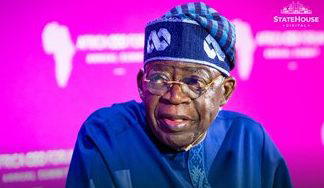
Tinubu’s regional federalism, by Suleiman A. Suleiman
Summarized and contextualized by DistantNews.
At a glance
Analysis
Sources not specified
Context piece
- Nigerian President Bola Ahmed Tinubu is implementing a political strategy that consolidates regional power, moving the country towards a federal structure reminiscent of the early 1960s.
- This approach, termed 'regional federalism,' aligns with the dominant political tradition of the Southwest, emphasizing stronger regions in relation to the federal center.
- The president's actions, including using federal power to strengthen regional units, reflect a long-standing region-centric political career rooted in the Southwest's political history.
President Bola Ahmed Tinubu is pursuing a political strategy that consolidates regional power, effectively moving Nigeria towards a federal structure reminiscent of the early 1960s. The author terms this approach 'regional federalism,' signifying a progressive attempt to regionalize federal power and ultimately strengthen the regions against the federal center.
This strategy is deeply rooted in the dominant political tradition of the Southwest, which has historically advocated for stronger regions in relation to the federal government, a vision espoused by the late Chief Obafemi Awolowo. The political behavior of the Southwest has consistently mirrored this position, often functioning as a single regional unit with a dominant political party, regardless of the increasing number of states. Even within the current ruling party at the center, the tendency is to govern as a regional unit rather than as part of a broader national coalition.
Tinubu's entire political career demonstrates this region-centric approach. His presidency is characterized by actions rather than words, revealing a clear regional logic. This disposition was evident during his governorship of Lagos State (1999-2007), where he engaged in political and judicial battles with then-President Obasanjo. While Obasanjo sought to integrate the Southwest into mainstream federal politics, Tinubu resisted, ultimately strengthening his regional base by reclaiming Southwest states from the then-national PDP party.
After 2007, Tinubu continued to pursue this vision through a long-term strategy. While not holding office, he remained politically active, working to consolidate the Southwest into a single-party region and positioning himself for future influence. This historical connection and regional focus have not diminished despite military-led state creations or participation in the federal center; instead, federal power is now being used to enact and strengthen this regional vision.
DistantNews Editorial
Originally published by Vanguard. Summarized and contextualized by our editorial team with added local perspective. Read our editorial standards.
More Stories


From Our Blog

How the Same Story Looks Different in Different Countries

What Gets Lost (and Found) When News Is Translated

The Critical Role of Diaspora Media in Global News

What Travellers Should Know About Countries with Restricted Press

A Digital Nomad's Guide to Following Local News
