


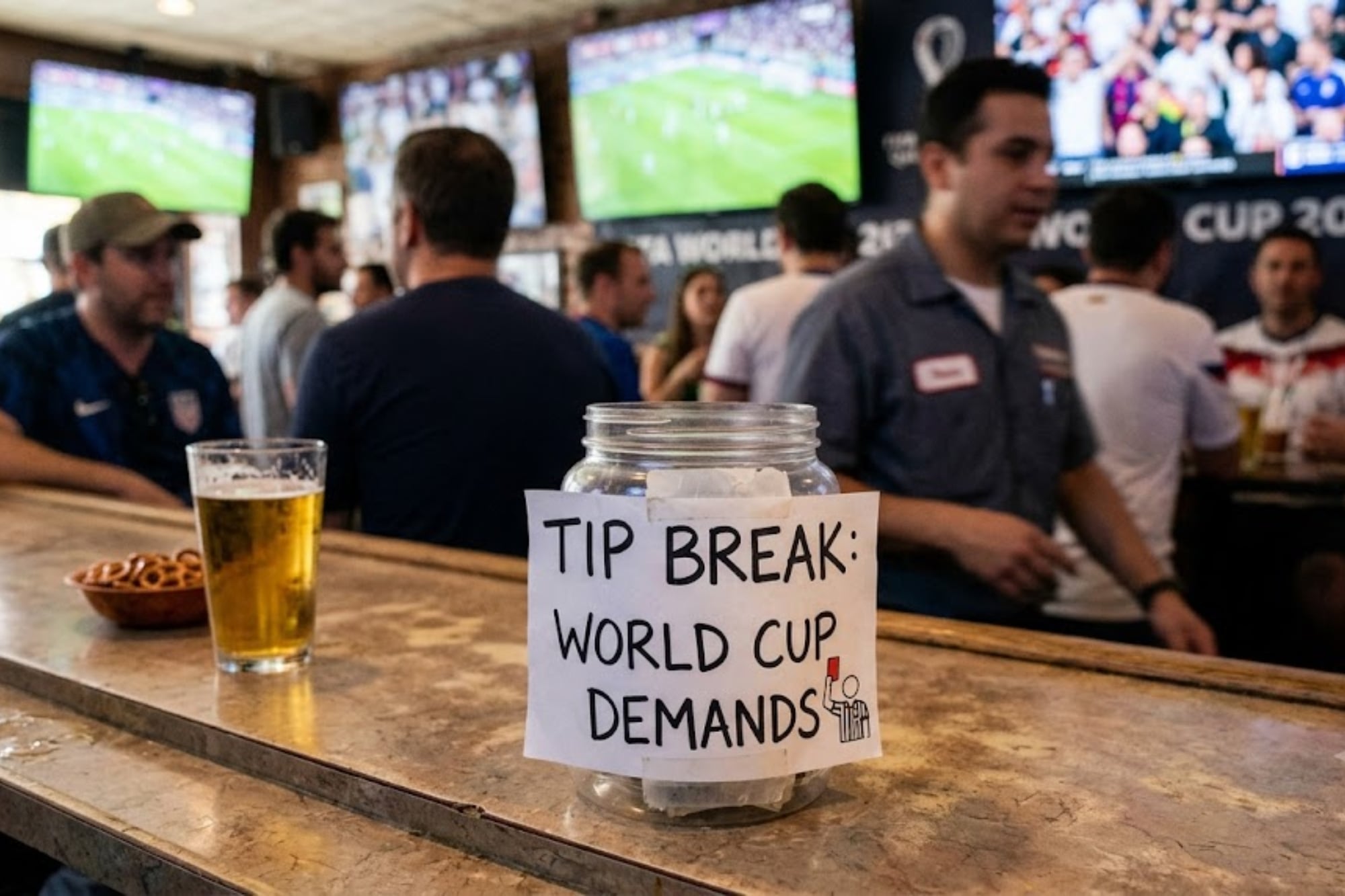
Tipping curbs: The conflict behind the 2026 World Cup in New York
Translated from Spanish, summarized and contextualized by DistantNews.
At a glance
News
Named sources
Context piece
- New York City is experiencing a cultural clash over tipping practices due to the influx of tourists for the 2026 World Cup.
- Tourists unfamiliar with the U.S. tipping system are causing tension with service workers who rely on tips for a living wage.
- The article explains the legal basis for lower minimum wages for tipped workers in New York and the resulting financial dependence on gratuities.
New York City is grappling with a cultural clash over tipping as it prepares for the 2026 World Cup, with an influx of international tourists unfamiliar with the U.S. system creating friction. Many visitors expect menu prices to be all-inclusive, leading to misunderstandings and frustration when faced with the expectation of additional gratuities.
Service workers in the city, however, view tips as an essential component of their monthly income. A restaurant worker stated, "The tip is what can lead us to a respectable salary for survival in New York." This reliance stems from a legal framework that allows employers in tipped sectors to pay a lower base wage, with the assumption that tips will bridge the gap to the minimum wage.
This divergence in expectations has led to tense situations in various establishments. A tourist from Argentina noted, "In Argentina, tips are not mandatory and are voluntary. And yes, the imposition is a bit shocking." The legal minimum wage for tipped workers in New York City, as of January 1, 2026, is $14.15 per hour for service workers (excluding food service), with a tip credit of $2.85. For food service workers, the base wage is $11.35 per hour, with a tip credit of $5.65. While employers cannot legally force customers to tip, the absence of a tip is often perceived as discourteous in New York.
The article highlights the precarious financial situation of many service employees who depend heavily on these additional payments. While the legal structure exists, the reality on the ground is that a significant portion of income for these workers comes from customer generosity, making the cultural differences in tipping a significant issue during this period of increased tourism.
DistantNews Editorial
Originally published by La Nación in Spanish. Translated, summarized, and contextualized by our editorial team with added local perspective. Read our editorial standards.
More Stories


From Our Blog

What Gets Lost (and Found) When News Is Translated

The Critical Role of Diaspora Media in Global News

What Travellers Should Know About Countries with Restricted Press

A Digital Nomad's Guide to Following Local News

How the Same Story Looks Different in Different Countries
