


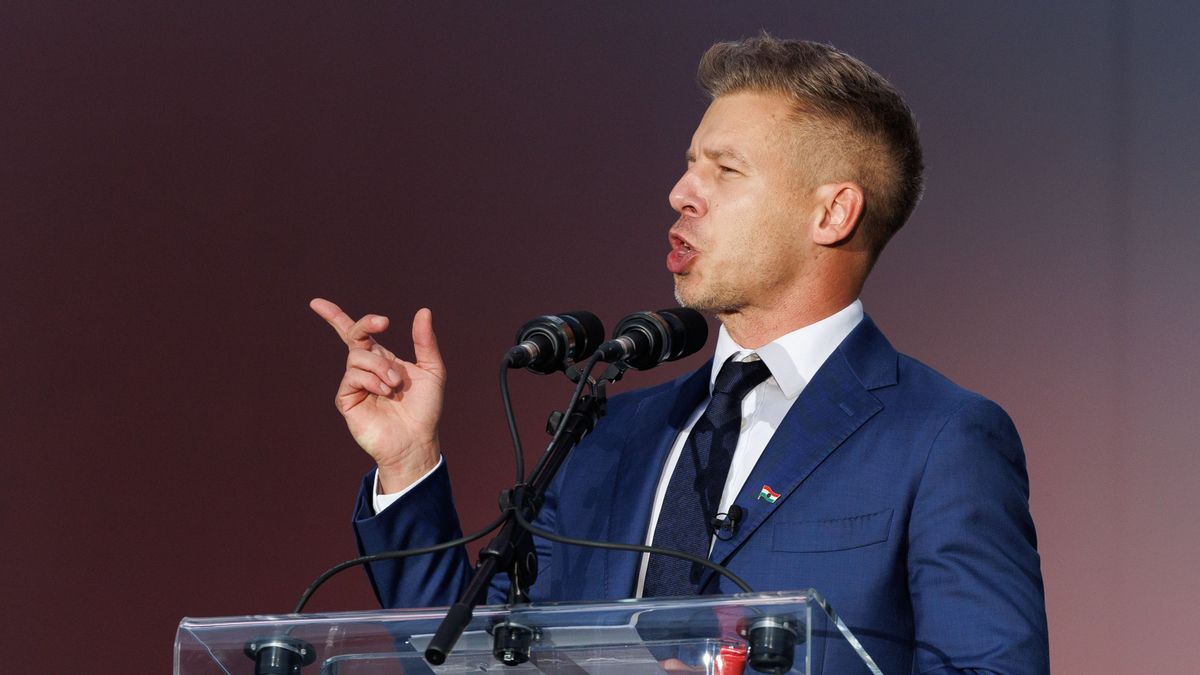
Tisza Party Proposes 1% Wealth Tax on Assets Over 1 Billion Forints
Translated from Hungarian, summarized and contextualized by DistantNews.
TLDR
- The Tisza Party, led by Péter Magyar, plans to introduce a 1% annual wealth tax on individuals with assets over 1 billion forints.
- Property values would be assessed by the National Tax and Customs Administration (NAV).
- The party acknowledges risks like asset concealment and enforcement challenges, proposing strong tax authority oversight.
The Tisza Party, under the leadership of Péter Magyar, has unveiled a significant policy proposal: the introduction of a 1% annual wealth tax for individuals possessing assets exceeding 1 billion forints. This move signals a potential shift in Hungary's fiscal landscape, targeting accumulated wealth as a new source of state revenue. The party's announcement, made after a faction meeting, has immediately sparked discussion about the practicalities and potential ramifications of such a tax.
A key aspect of the proposal is the mechanism for asset valuation, with the National Tax and Customs Administration (NAV) designated to determine the worth of properties. This centralized approach aims to ensure consistency, though it raises questions about the accuracy and fairness of such assessments. Furthermore, the plan includes a hefty 400% penalty for undeclared assets, a measure designed to deter evasion. The Tisza Party acknowledges the inherent risks, including the potential for capital flight and the immense administrative burden on the tax authority to track down assets both domestically and abroad.
From our standpoint at Magyar Nemzet, this proposal represents a bold, perhaps even radical, departure from Hungary's current tax system. While the intention to tap into significant wealth for public good is understandable, the practical execution presents formidable challenges. The potential for bureaucratic overreach, the difficulty in accurately valuing diverse assets, and the risk of capital flight are serious concerns that cannot be overlooked. The success of such a wealth tax hinges on robust enforcement and public trust, elements that will be crucial to monitor as this policy develops. This initiative, while aiming for greater fiscal equity, carries substantial risks that warrant careful consideration by policymakers and the public alike.
DistantNews Editorial
Originally published by Magyar Nemzet in Hungarian. Translated, summarized, and contextualized by our editorial team with added local perspective. Read our editorial standards.
More Stories



From Our Blog

Countries Without a Free Press: What You Need to Know

What Press Freedom Means for the News You Read

What Gets Lost (and Found) When News Is Translated

The Critical Role of Diaspora Media in Global News

What Travellers Should Know About Countries with Restricted Press
