


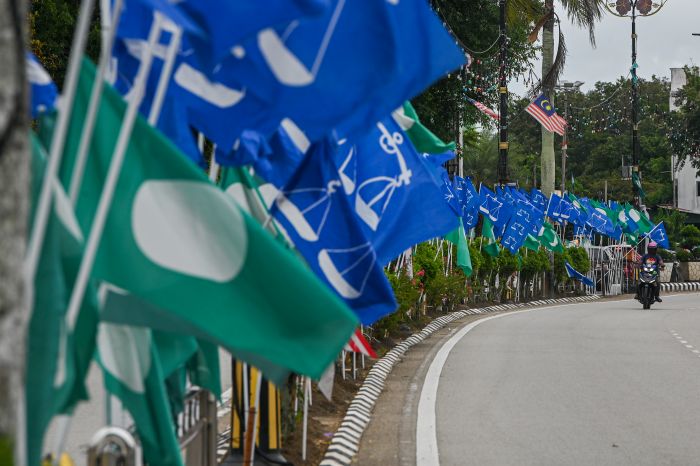
Too Many Candidates, Blurry Mandates: Malaysia's Electoral Fragmentation
Translated from Malay, summarized and contextualized by DistantNews.
At a glance
Analysis
Sources not specified
Context piece
- Malaysia's electoral landscape has become increasingly fragmented, with numerous parties and coalitions competing in recent general elections.
- This fragmentation often leads to election winners securing only a plurality of votes, raising questions about their mandate's legitimacy.
- Proposals suggest stricter regulations, such as limiting the number of major coalitions or requiring longer party registration periods, to ensure clearer electoral outcomes and government stability.
Malaysia's parliamentary democracy, which has held 15 general elections since independence, faces a growing challenge from an increasingly fragmented political scene. In the early days, a few dominant parties like UMNO, MCA, and MIC formed the ruling coalition, with limited opposition. This often resulted in straightforward two-way contests, making voter choices clear.
However, the political landscape has dramatically shifted, particularly leading up to the 15th General Election in 2022. The emergence of numerous new parties and several major political coalitions, including Barisan Nasional (BN), Pakatan Harapan (PH), Perikatan Nasional (PN), Gabungan Parti Sarawak (GPS), and Gabungan Rakyat Sabah (GRS), has led to multi-cornered fights in many constituencies. It is now common for three to 10 candidates to vie for a single seat.
In many cases, the winning candidate receives less than 50 percent of the total votes cast.
This proliferation of candidates and parties has created a situation where election winners frequently secure only a simple majority, not a true majority of the overall vote. In many cases, the winning candidate receives less than 50 percent of the total votes cast. This raises significant questions about the legitimacy and strength of the mandate given by the people, as more than half the electorate may not have chosen the representative who ultimately wins.
This situation can affect the stability of the government that is formed.
Furthermore, the sheer number of candidates can confuse voters and hinder the selection of truly qualified individuals. Victories are sometimes attributed more to vote-splitting among numerous parties than to the strength of a candidate's platform or experience. This can impact the stability of the resulting government. Consequently, there are calls for the Election Commission (SPR) and the government to review existing regulations. Suggestions include introducing stricter criteria, such as requiring parties to be registered for at least six years or mandating minimum membership within a constituency. Some propose allowing only two main coalitions to contest in a single area, excluding independent candidates, to foster more balanced and clearer competitions.
Models like the two-party systems in the United Kingdom and Australia are often cited as examples of how such structures can produce more stable and robust governments. Malaysia is urged to avoid a political environment so fractured that it undermines administrative stability. Therefore, improvements to the electoral system are considered necessary to ensure that election results genuinely reflect the will of the majority of the people.
Malaysia needs to avoid a political situation that is too divided, which could undermine administrative stability.
DistantNews Editorial
Originally published by Utusan Malaysia in Malay. Translated, summarized, and contextualized by our editorial team with added local perspective. Read our editorial standards.
More Stories



From Our Blog

What Gets Lost (and Found) When News Is Translated

The Critical Role of Diaspora Media in Global News

What Travellers Should Know About Countries with Restricted Press

A Digital Nomad's Guide to Following Local News

How the Same Story Looks Different in Different Countries
