

Top Scientists Leave US, UK for China in 2026 Amid Funding and Opportunity Concerns
Translated from English, summarized and contextualized by DistantNews.
At a glance
In-depth
Sources not specified
Context piece
- Numerous scientists and experts are relocating from the US and UK to China in 2026, citing various reasons.
- Key factors include insufficient research funding in Western countries and limited opportunities for Chinese academics to lead projects.
- The article highlights ten specific individuals who have made the move, detailing their backgrounds and motivations.
Dozens of scientists and experts have chosen to advance their careers in China during 2026, leaving behind positions in the United States and Britain. These professionals cite a range of factors influencing their decision, notably insufficient research funding and a perceived lack of opportunities for Chinese academics to spearhead projects in Western institutions.
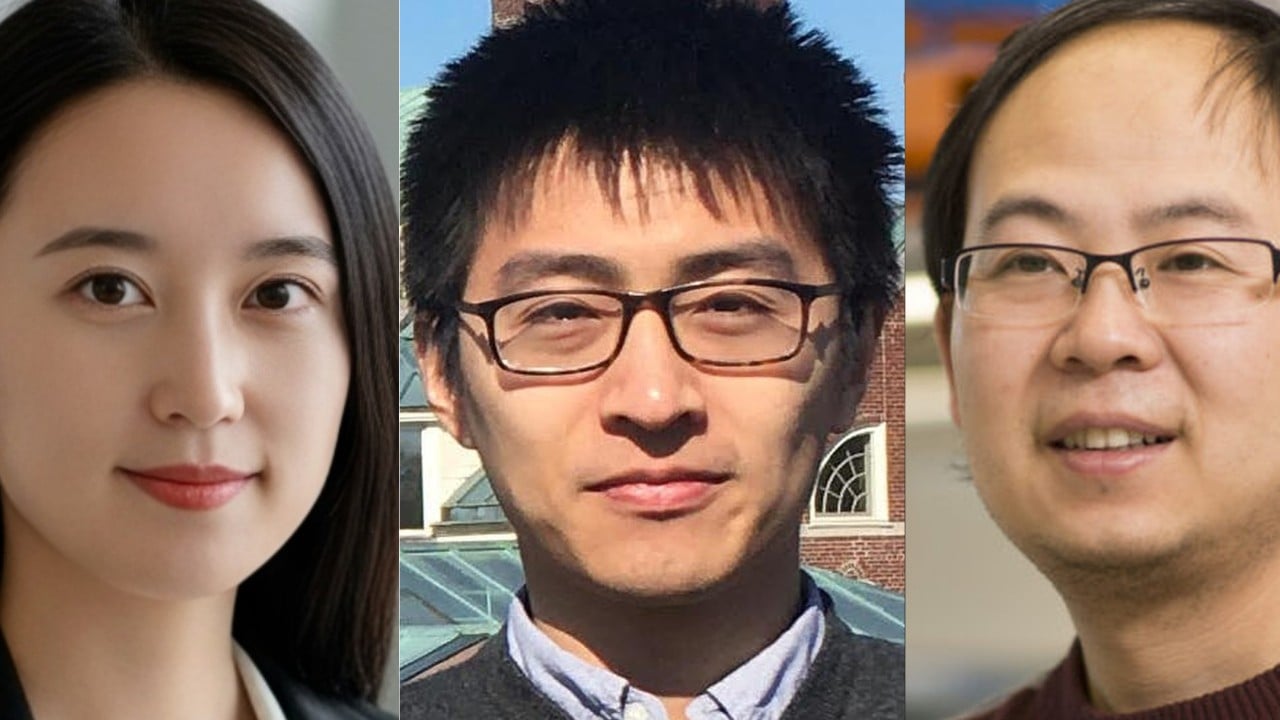
The article spotlights ten such individuals whose journeys have captured significant reader interest. Among them is Yale scientist Zhang Kai, who returned to China to pursue his ambition of building an ultra-large-scale cellular structure group data bank with unprecedented precision. He described returning home as a "natural choice" to fulfill his goals.
returning home to China was the natural choice to fulfil his ambition.
Energy scientist Chen Peipei left Cambridge University to establish her own laboratory in Hong Kong. For some early-career researchers, the allure of British academia is diminishing due to shrinking research budgets and a complex geopolitical climate, prompting them to seek stability and resources elsewhere.
Nobel laureate Omar Yaghi, winner of last year's Nobel Prize in Chemistry, has joined Tsinghua University in China to lead a new AI-driven research center. Similarly, physicist Dai Liang, who previously held a fellowship for "brightest young scientists" in the US and Canada for his black hole research, has returned to China for a post in Shanghai.
the prestige of British academia is being marred by shrinking research funding and a complex geopolitical climate, prompting top-tier talent to look elsewhere for stability and resources.
Other notable figures include semiconductor scientist Jiang Jianfeng, who moved from MIT to Peking University, achieving doctoral supervisor status in just 18 months. Neurobiologist Chih-Ying Su left the University of California San Diego to join the Shenzhen Academy of Medical Sciences, while AI scientist Ling Haibin, creator of the first mobile plant identification app, transitioned from Stony Brook University to Westlake University.
Additionally, Liang Jie, recognized as North America's top computer vision scientist, has returned to China after two decades of work at Microsoft. An award-winning memory chip expert also left the US for a position at a Chinese semiconductor firm, further illustrating the trend of talent migration.
the decision to return to his home country is a “natural choice”.
DistantNews Editorial
Originally published by South China Morning Post in English. Translated, summarized, and contextualized by our editorial team with added local perspective. Read our editorial standards.
More Stories
From Our Blog

Countries Without a Free Press: What You Need to Know

What Press Freedom Means for the News You Read

What Gets Lost (and Found) When News Is Translated

The Critical Role of Diaspora Media in Global News

What Travellers Should Know About Countries with Restricted Press
