


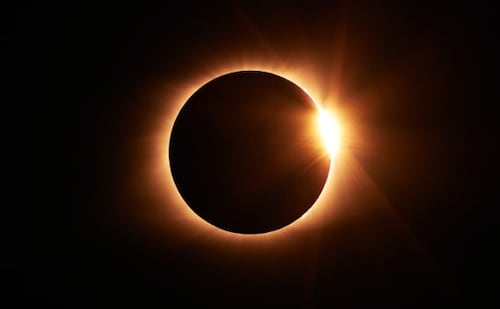
Total Solar Eclipse in August 2026: Will It Be Visible From Mexico?
Translated from Spanish, summarized and contextualized by DistantNews.
At a glance
News
Sources not specified
New plan
- A total solar eclipse will occur on August 12, 2026, generating excitement among astronomy enthusiasts in Mexico.
- The eclipse will not be visible in Mexico, but can be observed in Greenland, Iceland, northern Russia, the Atlantic Ocean, Spain, and parts of Portugal.
- A partial solar eclipse will be visible in parts of the northern United States, Canada, Europe, and northwest Africa, with the total eclipse lasting over 2 minutes for those in the path.
Mexico will not witness the total solar eclipse scheduled for August 12, 2026, despite significant anticipation among astronomy lovers in the country. The celestial event, where the Moon will completely obscure the Sun, will primarily be visible in Greenland, Iceland, northern Russia, the Atlantic Ocean, Spain, and a small area of northwest Portugal.
While the full spectacle is out of reach for Mexico, a partial solar eclipse will grace the skies in other parts of the Northern Hemisphere. This includes regions of the northern United States, most of Canada, large parts of Europe, and northwest Africa. For those fortunate enough to be in the path of totality, the Sun will be completely hidden for over two minutes, as part of a larger four-hour, 20-minute phenomenon.
Specialized solar viewing glasses or safe manual solar viewers are essential for observing any partial solar eclipse directly. NASA advises against looking at the Sun through cameras, telescopes, or binoculars, even with protective eyewear, as solar rays can penetrate filters and cause severe eye injury. For those in Latin America and the Southern Hemisphere unable to see the eclipse, official NASA channels on YouTube and social media will offer live streams.
DistantNews Editorial
Originally published by El Universal in Spanish. Translated, summarized, and contextualized by our editorial team with added local perspective. Read our editorial standards.
More Stories



From Our Blog

What Press Freedom Means for the News You Read

What Gets Lost (and Found) When News Is Translated

The Critical Role of Diaspora Media in Global News

What Travellers Should Know About Countries with Restricted Press

A Digital Nomad's Guide to Following Local News
