

‘Totally Unexpected’: China’s Trial Taklamakan Desert Wheat Yield Doubles National Average
Translated from English, summarized and contextualized by DistantNews.
At a glance
News
Official statement
New plan
- Wheat grown in a trial plot in China's Taklamakan Desert yielded nearly double the national average.
- The Jingmai 189 wheat variety is engineered to resist drought, saline soil, and poor land conditions.
- This development could offer new possibilities for food production in arid and challenging environments globally.
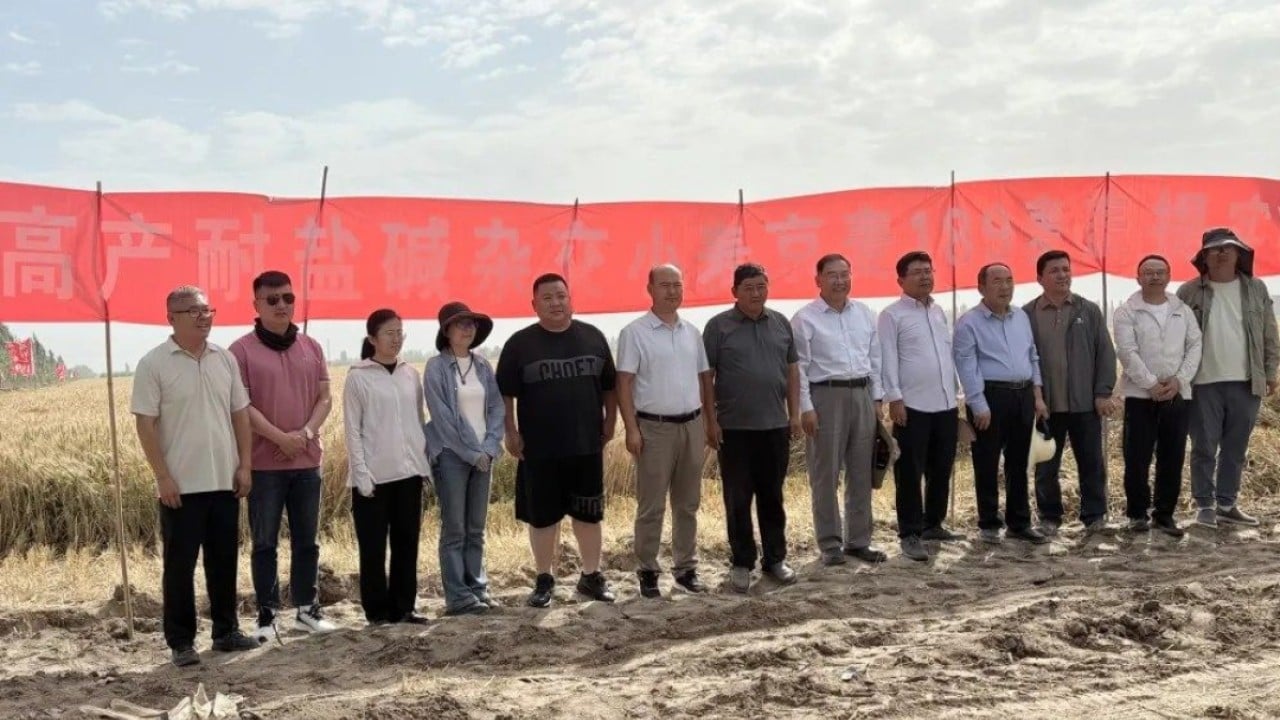
A demonstration wheat plot situated in China's vast Taklamakan Desert has achieved a remarkable harvest, producing nearly double the national average yield recorded in 2025. The announcement comes from the project's developers, who have engineered a wheat variety specifically designed to thrive in harsh conditions.
The wheat, known as Jingmai 189, was developed by the Beijing Academy of Agriculture and Forestry Sciences. Its genetic makeup allows it to withstand drought, saline soil, and land that is poor in nutrients. The trial, conducted on a managed plot with high salinity, yielded 768kg per mu, which translates to approximately 11.5 tonnes per hectare or 10,278 pounds per acre.
This yield significantly surpasses the national average wheat yield of 399.2kg per mu reported last year, according to the academy's Institute of Hybrid Wheat Research. A spokesman for the institute described the results as "totally beyond our expectations" on June 26.
The breeding technology behind Jingmai 189 is considered internationally competitive, and trial cultivation has already commenced in Belt and Road Initiative countries, including Pakistan and Uzbekistan. This breakthrough arrives at a time when nations worldwide are seeking innovative methods to increase food production amidst challenges like shrinking arable land, accelerating desertification, and climate change.
If deserts can be transformed into productive farmland, even on a limited scale, the implications could extend far beyond western China, offering potential solutions for food security in arid regions globally.
It was totally beyond our expectations.
DistantNews Editorial
Originally published by South China Morning Post in English. Translated, summarized, and contextualized by our editorial team with added local perspective. Read our editorial standards.
More Stories

From Our Blog

Countries Without a Free Press: What You Need to Know

What Press Freedom Means for the News You Read

What Gets Lost (and Found) When News Is Translated

The Critical Role of Diaspora Media in Global News

What Travellers Should Know About Countries with Restricted Press
