

Toyota Argentina eyes record production amid high global demand
Translated from Spanish, summarized and contextualized by DistantNews.
At a glance
News
Sources not specified
Context piece
- Toyota Argentina plans a record production of 183,400 units in 2026, nearing its installed capacity of 185,000 vehicles annually.
- The plant will reduce its usual July production halt to just two days (July 27-28) due to high demand for the Hilux from 22 export markets.
- To meet demand, the plant will extend shifts and add an extra production shift on Saturdays, while also accommodating employee viewing of World Cup matches.
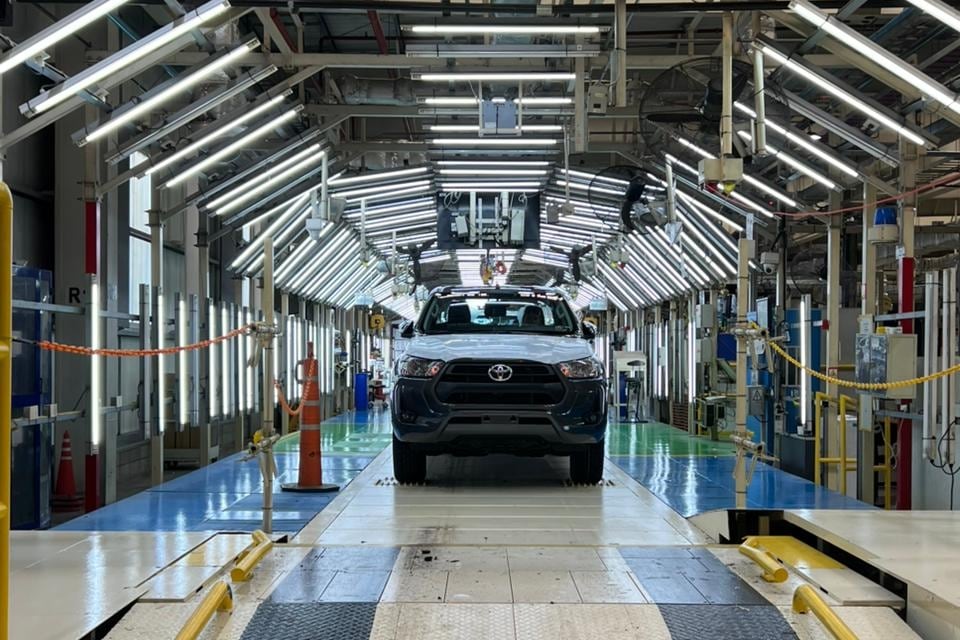
Toyota Argentina is gearing up for a historic production year, projecting 183,400 units in 2026, which would approach the plant's maximum annual capacity of 185,000 vehicles. This anticipated record output underscores the significant global demand for the Hilux, which is exported from Argentina to 22 different markets.
To accommodate this demand, the company is significantly shortening its traditional July production shutdown. Instead of the usual multi-week technical and maintenance pause, the Zárate plant will halt operations for only two days, July 27 and 28. Following this brief interruption, the plant will operate with extended shifts from July 29 to 31 and add an extra production shift on Saturday, August 1.
This intensified schedule reflects the high-pressure environment at the Zárate facility, where a vehicle is completed every 89 seconds, totaling 806 units daily. The plant runs on three shifts, directly employing around 8,000 people and indirectly supporting an estimated 30,000 jobs through its supply chain.
In a unique move, Toyota also adjusted its production calendar to allow employees to watch Argentina's World Cup matches. For the first two games, the company set up a tent for approximately 4,000 employees to view the matches during shift changes, demonstrating a commitment to employee well-being alongside ambitious production goals.
DistantNews Editorial
Originally published by La Nación in Spanish. Translated, summarized, and contextualized by our editorial team with added local perspective. Read our editorial standards.
More Stories


From Our Blog

What Gets Lost (and Found) When News Is Translated

The Critical Role of Diaspora Media in Global News

What Travellers Should Know About Countries with Restricted Press

A Digital Nomad's Guide to Following Local News

How the Same Story Looks Different in Different Countries
