


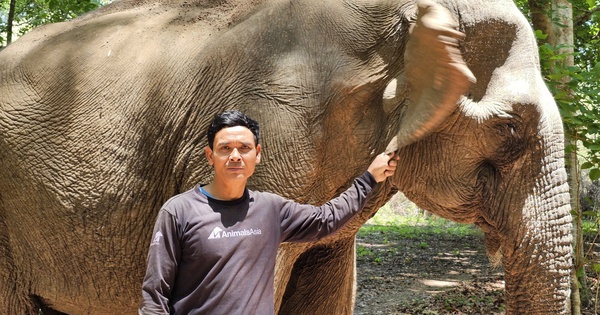
Tracking Elephant Footprints: Facing Wild Elephants to Save a 'Giant Friend'
Translated from Vietnamese, summarized and contextualized by DistantNews.
At a glance
In-depth
Sources not specified
Context piece
- A mahout in Vietnam's Yok Don National Park recounts his two decades of dedication to a former tourist elephant named Y Khun.
- The elephant, once forced to carry tourists, now roams freely in the park, showing improved health and temperament after the cessation of tourist rides.
- The mahout bravely intervened one night in 2017 when a wild bull elephant approached Y Khun, distracting the bull to allow Y Khun to escape.
For over twenty years, mahout Y Mức Kđoh has dedicated his life to Y Khun, an elephant at Vietnam's Yok Don National Park. His story is intertwined with the elephant's journey from a life of forced labor to one of freedom.
Y Mức Kđoh began working at the park in 2001, the same year it acquired four elephants, including the one that belonged to his own family. He has cared for Y Khun ever since. Previously, Y Khun, like many other elephants in the park, was used for tourist rides. This involved long hours standing in the sun, being tethered, and having a restricted diet, which significantly impacted the elephants' health and well-being.
"Seeing the elephants then was heartbreaking," Y Mức Kđoh recalled. "They couldn't move freely or eat naturally. Their health visibly declined." The transition to a more ethical tourism model, where elephants are observed in their natural habitat rather than ridden, marked a turning point. Y Khun, now free to roam, forage, and socialize with other elephants, has transformed.
Seeing the elephants then was heartbreaking. They couldn't move freely or eat naturally. Their health visibly declined.
"The elephant can move freely, find its own food, and choose where to drink," he said, a rare smile gracing his sun-weathered face. "Its personality has become much more lively and happy. The most precious thing is to live with its own kind, foraging together under the forest canopy."
However, returning elephants to the wild also means confronting its harsh realities. Y Mức Kđoh vividly remembers a night in 2017 when a wild bull elephant, in its mating season, approached Y Khun. While Y Khun was unaware of the danger, the bull detected her scent and charged. In a split-second decision, the mahout bravely placed himself between the wild elephant and Y Khun, using his flashlight and shouting to divert the bull's attention. His courageous act allowed Y Khun to escape the immediate threat.
The elephant can move freely, find its own food, and choose where to drink. Its personality has become much more lively and happy. The most precious thing is to live with its own kind, foraging together under the forest canopy.
DistantNews Editorial
Originally published by Thanh Niên in Vietnamese. Translated, summarized, and contextualized by our editorial team with added local perspective. Read our editorial standards.
More Stories

From Our Blog

What Gets Lost (and Found) When News Is Translated

The Critical Role of Diaspora Media in Global News

What Travellers Should Know About Countries with Restricted Press

A Digital Nomad's Guide to Following Local News

How the Same Story Looks Different in Different Countries
